Renovation Rewards in the Cotswolds
While many buyers now favour turnkey properties, wary of the cost, time and complexity of a major renovation, the Cotswolds still offers compelling opportunities for those with an appetite for a project. With specialist input and a deliberate approach, the right property can be remodelled to create a truly exceptional legacy home – and a robust long-term investment – writes our Partner and Head of the Cotswolds Harry Gladwin
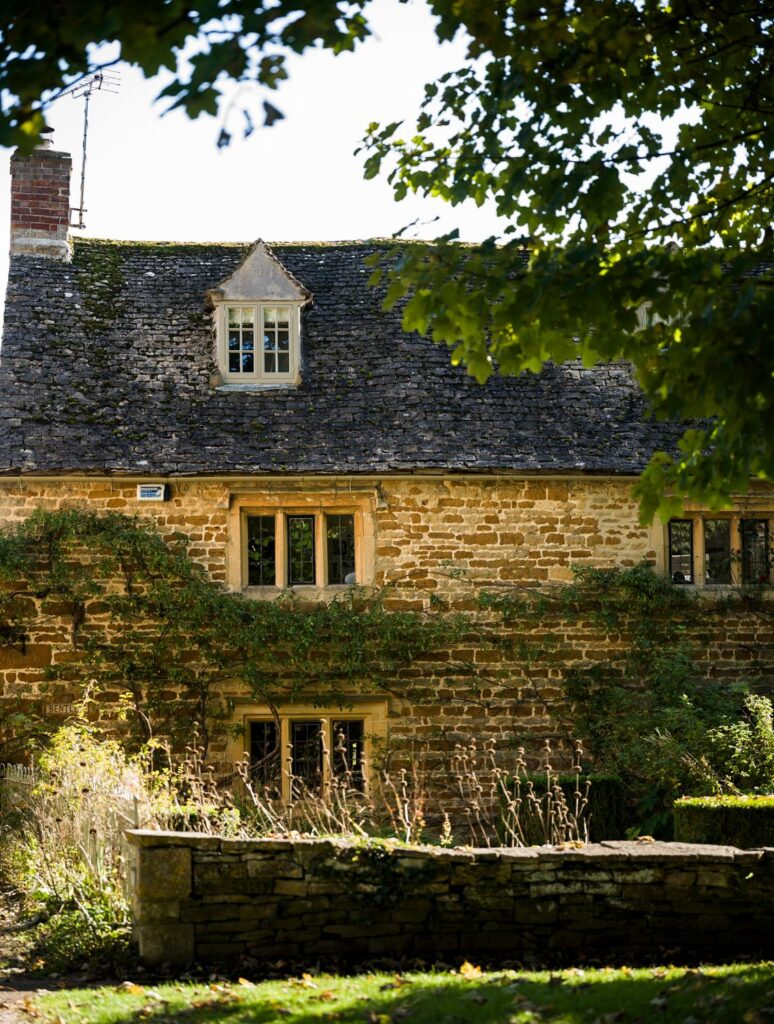
The allure of crafting a truly bespoke property that leaves a lasting legacy, or the romance of stewarding a historic property into its next chapter is irresistible to some. Fifteen or 20 years ago buyers might purchase a house for £1 million, spend another £1 million transforming it and end up with a £3 million property. A renovation project was the aspiration and the numbers stacked up.
Yet the rising cost of a large-scale project – not to mention the stress and time-consuming complexity of a build – have caused appetites to shift, particularly at the upper end of the market.I’m seeing far more buyers prioritising turnkey homes than those actively seeking properties with renovation potential.
One of the fundamental issues is that many sellers simply haven’t adjusted their expectations to reflect the true cost of major works. Construction material prices rose by 15% in the 12 months following Russia’s invasion of Ukraine in February 2022, according to the Department for Business and Trade. Costs have eased slightly (up 3.7% in the 12 months to January 2026), but the Building Cost Information Service forecasts a 15% rise in the next five years, with the Iran war likely to push costs higher. Labour costs have also risen sharply as a result of higher national insurance contributions for employers.
Renovations that once required a few hundred thousand pounds now run into the millions. Sellers haven’t caught up with that reality, creating a disconnect between expectation and execution.
In the Cotswolds’ most desirable ‘golden triangle’ – the area around Chipping Norton, Stow-on-the-Wold and Burford – property prices remain robust and, as I have consistently seen, continue to rise. Best-in-class properties in these prime locations still command a premium. Elsewhere in the Cotswolds region, the market is more complex. Many properties came to market last year priced at around 20% above where they realistically should have been, as sellers and agents pushed expectations higher. But I’m starting to see those numbers correcting to more sensible levels, heightening the renovation potential from a financial perspective. When priced realistically, the houses sell – and quickly.
The Turnkey Premium
An immaculate, turnkey property will always command a premium. That said, true turnkey quality to the standard that our clients expect is rare. Many houses have what I would describe as a veneer of quality, lacking in the finer attention to detail.
The very best examples tend to be homes renovated by owners for themselves, never expecting to sell. Corners weren’t cut and the finish is properly considered. When those houses come to market – often due to life changes such as divorce or relocation – they are highly sought after. For these kinds of properties, a 20% turnkey premium is not unusual.
Yet even then, buyers often want to put their own stamp on a new home with a kitchen of their choice, for example. For our clients, the cost of this can easily run into the hundreds of thousands and that kind of investment needs to be factored in from the outset.
Where Renovation Can Still Add Significant Value
Value can be created in almost any type of property – from modest bungalows to listed manor houses. But the greatest opportunity often lies in starting from scratch; demolishing what’s there and rebuilding from the ground up to create a truly unique home.
These properties can sometimes sit in reasonable acreage and are typically acquired for less money because they’re not of such high quality. There may also be stamp duty advantages depending on how surrounding land is classified and building from scratch can also offer VAT efficiencies on construction costs. Just as importantly, this allows you to start again with new drainage, new electrics and a layout designed entirely for modern living. When executed well, the result can be a genuinely best-in-class home that will always command a premium.
But location is critical. It costs as much to renovate in a C-grade location as it does in an A-grade one, but rarely returns the same value. So understanding exactly what and where you’re buying is critical. Without that knowledge you risk owning a very expensive lemon.
Having lived and worked in the Cotswolds for decades, through multiple market cycles, I’ve built up a detailed sense of which areas are consistently resilient, which come in and out of fashion, and which are most exposed during downturns. I see so many people spend vast sums improving houses in secondary locations, only to struggle to recoup their investment when they try to sell.
Older, perhaps listed properties with layouts that simply no longer work for modern living also hold hidden potential, although they can be difficult to find. A clever, sympathetic redesign retaining the character of the property can unlock considerable value – if executed with skill and consideration.
Red Flags Buyers Should Never Ignore
Certain compromises are very difficult to overcome, no matter how much money is spent on a renovation. Flood risk, proximity to busy roads, aircraft flight paths or public rights of way running directly past the house can all affect long-term value, regardless of renovation or turnkey status.
Other risks include structural issues such as roofs, subsidence, or listing restrictions. Many buyers assume listed status only applies to the façade; in fact, every element is considered to be historic fabric and is protected, and when you start peeling back the layers, you realise just how complex it can be.
Potential development nearby is another crucial consideration. With increasing pressure for housing across the UK, it’s vital to be aware of where large-scale development may occur in the future and its potential impact.
Given the cost of acquisition at this level, understanding those compromises from the outset in order to future-proof your purchase is essential.
Navigating Planning and Heritage
A substantial renovation can take anywhere between two to four years, particularly when planning permissions, heritage constraints and listed status are involved. For many of our clients with demanding professional lives, time is in very short supply, so assembling the right team of experts to smoothly and successfully steer the project through to completion is crucial.
There is often a myth that little can be done with historic properties in an Area of Outstanding Natural Beauty, or National Landscape as it is now known. In reality, it is rarely that simple. People tend to go wrong by becoming overly fixated on a particular outcome and then battling every stage of the planning process to achieve it.
The key is to work collaboratively with planners, conservation officers and heritage consultants. While the route may differ from what was initially imagined, with the right team it is usually possible to reach a very good outcome.
Within the Cotswolds National Landscape, the fundamental aim of the planners is to protect and enhance the environment. Projects that respect the landscape and work with it rather than against it tend to succeed.
We help our clients assemble the right team of leading specialists – from planning consultants to architects, surveyors, heritage specialists and builders – all of whom play an important role in navigating the process as smoothly as possible.
The Future of Renovation in the Cotswolds
Renovation projects in and around the Cotswolds are likely to become ever more complex. Planning authorities are already under huge pressure and have limited resources to process increasingly complicated applications. Suitable sites are becoming scarcer, and the region itself is more densely populated than it once was, so there is more sensitivity around creating new homes.
Acquisition costs are high – stamp duty alone can consume over 10% of the purchase price –and construction costs also remain unpredictable. Commodity prices have been rising steadily, and current geopolitical events create further volatility.
All of this is not to say that renovation projects should be off limits, but that they require greater care and consideration than ever before. Short-term buyers looking to hold their property for five years or less are particularly exposed, while those with a more long-term lens of 10-20 years have the market to cushion any missteps.
Too often buyers purchase first and only then begin their renovation research – by this point the margin for error becomes very small. It’s vital to understand what you’re buying, where and why, before you commit. Do your homework first, or you can find that the costs can quickly overwhelm.

Harry Gladwin is our Partner and Head of the Cotswolds Region
For news, expert commentary and invaluable property insight, subscribe to The Insider, our quarterly newsletter, here.
