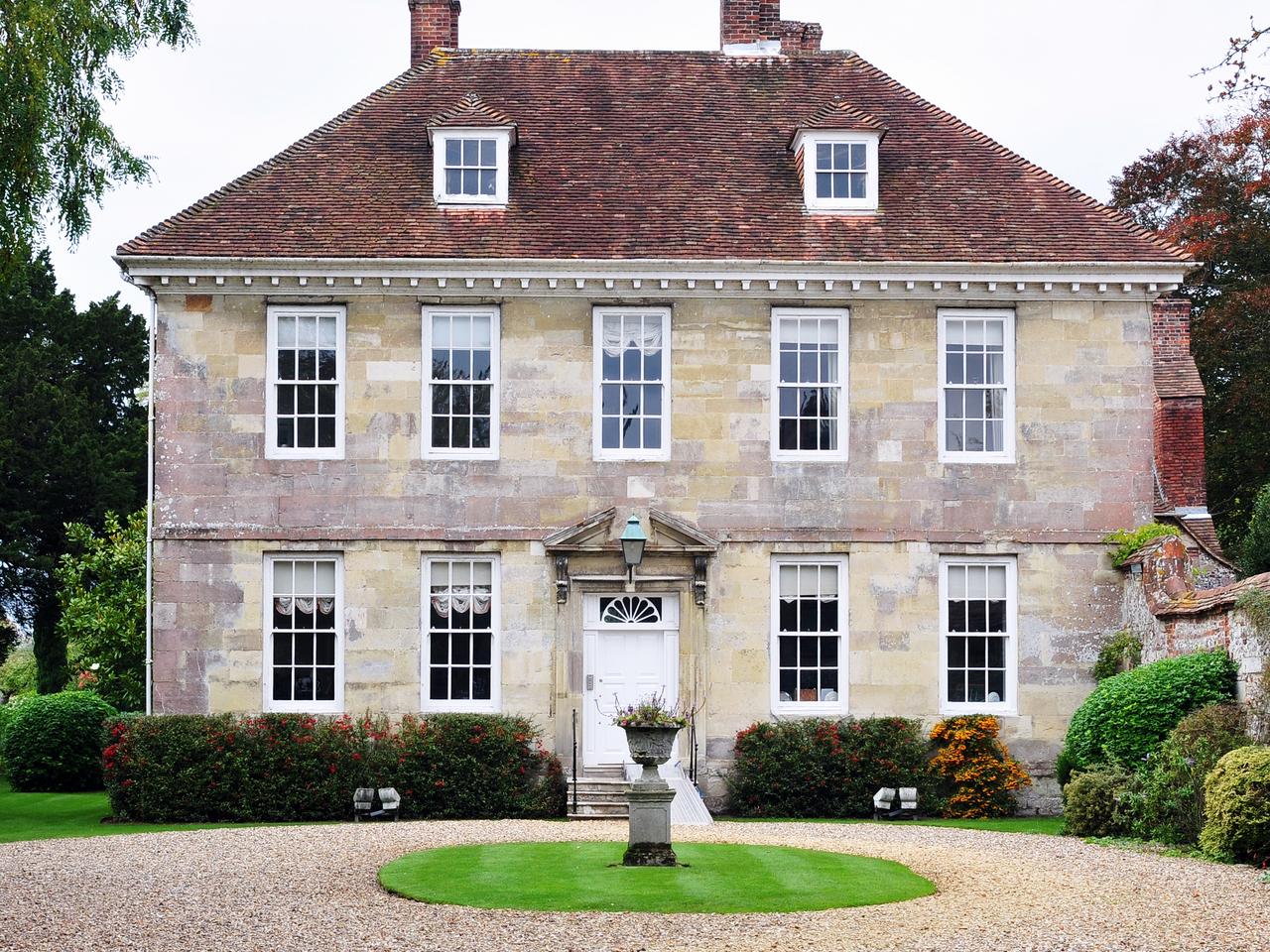
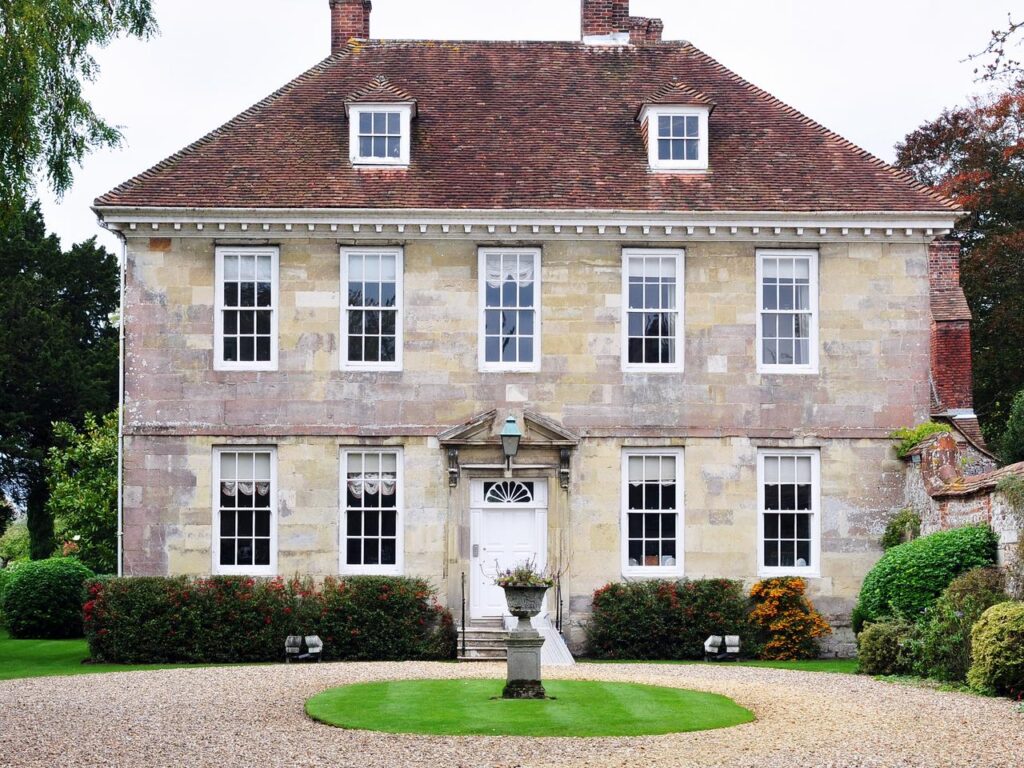
With the Chancellor’s so-called ‘mansion tax’ in her Budget less severe than anticipated, wealthy buyers are returning to the London market, Emma Haslett reports for The Observer, with insights from Will Watson, Head of The Buying Solution.
Sarah Frances Kelley for The Buying Solution
After months of sluggish growth – fuelled in part by uncertainty over what Chancellor Rachel Reeves’ Budget might contain – the property market is beginning to stir again, writes Emma Haslett for The Observer. Will Watson reflects on clients’ reactions in the days since the announcement and sets out his expectations for 2026.
As a new report suggests that the typical life aspiration of a forever home is losing its relevance, our Partner and Head of the Cotswolds, Harry Gladwin, speaks to Annabel Dixon at Country Life about what’s causing this shift among younger generations.
As broader economic factors have made it harder then ever to secure a dream family home, new research from Zoopla suggests that growing numbers of young homeowners prioritise flexibility and renovation potential over permanence. In this feature in Country Life magazine, Harry shares his insight on people reassessing their ‘forever home’ earlier in life and why buyers value the option to move.
With Chancellor Rachel Reeves’ Budget now unveiled, Will Watson, Head of The Buying Solution, assesses its implications for the property market – and specifically what it means for buyers.
Clarity in policy underpins everything in our industry, and after weeks of fevered speculation, Chancellor Rachel Reeves’ second Budget has at last delivered it. Within minutes of the OBR’s unprecedented “technical error” that leaked the headlines before she had even taken her place at the despatch box, my phone lit up. One long-standing client messaged simply: “Good news, let’s get going.” Moments later came another: “Let’s make this deal happen now.” The deal in question is just shy of £20 million.
For all the noise surrounding this Budget, the immediate reaction from clients suggests one thing above all: they have not been spooked. In fact, in several cases, the announcements appear to have provided precisely the sense of direction they have been waiting for.
At the centre of the property debate, of course, is the introduction of a so-called ‘mansion tax’ on homes valued above £2 million. It is a politically charged policy that had been hotly debated in the press, and now that it has arrived, its design is both predictable and consequential. The surcharge is structured to mirror council tax bands: £2,500 per year for properties valued between £2 million and £2.5 million, rising in stages to a maximum of £7,500 for homes worth £5 million or more. Implementation will not begin until April 2028, following a revaluation of high-value homes.
It is no surprise that this measure disproportionately affects London and the South-East. In many central postcodes, £2 million buys not extravagance but a decent, if unremarkable, family home. The threshold captures a broad and complex picture – from global investors to retirees who bought their property decades ago and have seen their local markets soar far beyond what their incomes reflect.
Yet for our clients purchasing at the upper end – £5 million and above – the annual levy of £7,500 is unlikely to be a deterrent. To be candid, many had been bracing for more severe measures. In this sense, the Budget may even be received as a relief. But while some buyers may take this in their stride, the behaviour of sellers remains the greater unknown. Some may feel newly emboldened to hold their price, reasoning that the long run-up to implementation removes any inclination to negotiate.
And that long run-up raises another question – one several clients have already put to me directly: has the Chancellor been bold enough? By pushing implementation of the surcharge to 2028, Reeves has given herself and the market time, but she has potentially also created a two-year window for uncertainty to accumulate. If revenues fall short, or if political winds shift, she may be forced to revisit property taxation in next year’s Budget, potentially with sharper measures. The market absorbs a single shock far more cleanly than a series of speculative tremors.
We should also expect some behavioural shifts. Owners of high-value homes who had been weighing whether to downsize may now see clear motivation to transact before 2028, avoiding a recurring annual levy that might otherwise chip away at their financial planning. A wave of such sales could release supply at the top end and, in turn, cool prices that have remained stubbornly insulated from the broader market slowdown. For buyers seeking large family homes or prime assets, this could finally unlock opportunities that have been scarce for several years.
But there is a less discussed and potentially overlooked group: asset-rich, cash-poor owners who cannot or do not wish to sell. For them, the so-called mansion tax may land less like a wealth surcharge and more like a second inheritance tax. While the option to defer payments until a sale provides relief in the short term, it shifts the burden onto heirs, altering the long-term economics of holding high-value property. This group forms part of the “squeezed middle”: owners whose homes have risen dramatically in value, often through no strategic decision of their own, but whose incomes do not match their postcodes.
Despite these complexities, the Budget’s broader impact on market sentiment should not be underestimated. Our economy depends on a housing market that moves – one that allows people to change jobs, start families, downsize, invest and plan. Transactional activity stimulates dozens of industries: construction, architecture, design, removals, retail, finance and more. When sales volumes rise, developers build more. When developers build more, the ladder becomes climbable again.
It is worth remembering, too, that the top end of the property market contributes disproportionately to the wider economy. Encouraging movement here is not an indulgence of the wealthy; it is an economic strategy. High-value transactions generate tax receipts, but they also create liquidity and confidence – two ingredients the housing sector has been sorely lacking.
The Reeves Budget is not radical. It is not without flaws. But after a year defined by hesitation and speculation, it offers clarity – and for many buyers and sellers, this will be enough for them to re-enter the market with purpose. The Chancellor may yet find that her mansion tax has done more to energise the market than to inhibit it.
For now, the early signals are encouraging. Clients who had paused are now progressing. Negotiations have restarted. And if sentiment continues to stabilise, 2026 may be the year the prime property market regains its momentum – not in spite of the Budget, but because of it.
With speculation mounting around a potential ‘mansion tax’ on properties valued above £2 million in Chancellor Rachel Reeves’ Autumn Budget, our Partners Harry Gladwin and Mark Lawson offered their insight to The Times for their tongue-in-cheek feature exploring the many (and often surprising) ways to devalue a home.
From artificial grass and indoor swimming pools to gaudy interior decoration and botched DIY jobs, David Byers reports for The Times on the myriad ways in which the value of a property can be reduced.
With a so-called ‘mansion tax’ on properties worth £2 million expected in the Budget on 26th November 2025, our Partners Harry Gladwin and Mark Lawson shared their tips on the home improvements which can actually devalue your home.
The move from London to the Home Counties is a well-trodden path, and for good reason. With beautiful countryside, vibrant market towns and excellent schools and connectivity, the region offers balance. Working together, our Partners Katherine Watters and Jemma Scott combine deep local insight to help clients find their perfect place.
The Chiltern Hills
Leaving London has long been a rite of passage for many families. The search for more space, cleaner air and stronger community ties draws buyers outwards each year, tracing familiar paths along the commuter lines that fan into Surrey, Berkshire, Buckinghamshire and Oxfordshire. Yet, for all the talk of good schools and train times, the success of such a move often hinges less on geography than on guidance.
At The Buying Solution, our Partners Katherine Watters for the Southern Home Counties and Jemma Scott for the North Home Counties have built a quietly powerful reputation for helping clients navigate this most emotionally charged of transitions. Covering the full sweep of the Home Counties between them, their partnership offers something rare in the property world: a single, joined-up service that transcends traditional boundaries.
“We share clients across regions all the time,” Katherine explains. If someone’s not quite sure whether they want to be near Guildford or Marlow, it doesn’t matter – we work together, and our clients get the same level of insight in both areas.”
A Cohesive Partnership
At the heart of Katherine and Jemma’s partnership is communication. Every client brief is discussed together, every update shared. “We’ll both join the first call,” says Jemma. “It’s important that clients see they’re not choosing between two areas or two people. They’re getting both of us: two perspectives, two sets of local knowledge – working towards the same goal.”
That collaboration has proved particularly valuable for the many families who begin with a wide-ranging brief. “We often meet people who know they need to be within an hour of London, but they have no idea where to base themselves,” says Katherine. “That’s when we’ll take them on orientation tours – two or three days of exploring different counties, villages and schools. It’s about helping them understand how each area feels before they commit.”
The approach is as much about education as it is about property. Clients are introduced not only to houses but to lifestyles – bustling market towns and quiet hamlets, the realities of rural broadband, the subtleties of train routes. “We’re not selling anything,” Kat adds. “We’re guiding, helping people imagine the reality of their new life, and then gently making that vision real.”
Chiddingfold, Surrey
The Enduring Appeal of the Home Counties
The reasons for moving to the Home Counties remain remarkably consistent. “For most families, it comes down to schools, commutability, and a sense of belonging,” says Jemma. “People want their children to have space and a great education, but they don’t want to feel cut off.”
Surrey’s gated estates, from Cobham to Oxshott, offer privacy and proximity for those making their first step out of London. The Surrey Hills and villages south of Guildford appeal to buyers seeking a more rural way of life but still within a 45-minute train ride of Waterloo. Northwards, the Chilterns and Thames Valley blend riverside life with market-town sophistication: Henley-on-Thames, Marlow and Beaconsfield remain perennial favourites.
“The Home Counties are incredibly diverse,” says Jemma. “You can have 1930s family houses in one village and 17th-century cottages two miles away. That variety means there’s something for everyone – the key is knowing where to look.”
For many clients, familiarity plays a decisive role. “It’s amazing how often people return to where they grew up,” Katherine observes. “You hear, ‘My parents lived here’ or ‘My best friend has just moved there.’ That sense of connection gives people confidence to move and means that they will often find like-minded people who have made a similar move themselves.”
The London Connection
Although working patterns have evolved, London remains the gravitational centre for many of Katherine and Jemma’s clients. “There’s always a link,” Jemma explains. “Some need to be in the office two or three days a week; others just want to be close enough for dinner, theatre, or the airport. Either way, the Home Counties keep them within reach.”
She recalls a recent family relocating from abroad, with little understanding of the geography. “They wanted good prep schools, countryside, and an hour to central London. That’s a huge brief. But when we talked through what really mattered – commute length, close enough to visit grandparents in the Midlands, lifestyle – we quickly narrowed it to three or four areas. It’s about translating aspiration into practical choice.”
Katherine agrees. “A lot of our clients come to us feeling overwhelmed. They’ve got property alerts from half the Home Counties and no real direction. We bring focus. It’s about saying: if you need to be in Holborn, and you love countryside walks, let’s look at the Guildford line, not the South Downs. We turn the noise into a plan.”
Marlow, Buckinghamshire
A Market Maturing Gracefully
After the feverish years of 2021–22, both Katherine and Jemma describe the Home Counties current market as steadier and, in many ways, healthier. “Buyers are more measured,” says Katherine. “They’re asking questions, doing due diligence, and taking advice. Gone are the days of throwing money at anything with a garden.”
Jemma agrees that realism now defines the tone. “Those pandemic premiums have faded, which is good news for the long term. People who overpaid in haste are discovering the importance of context: flight paths, road noise, village amenities. Sensible pricing and good research are back in vogue.”
This shift plays perfectly to their strengths. “We’ve always taken a forensic approach,” says Katherine. “We’ll check planning histories, school catchments, infrastructure changes – all the details that can make or break a property’s value. That’s where clients see real return on advice.”
The Human Side of the Search
Beyond logistics and market data lies the human dimension. Both Katherine and Jemma have spent years working face-to-face with clients, often over months of searching and decision-making. “It’s a journey,” Jemma reflects. “You see people’s priorities evolve – they start thinking about square footage and end up talking about where their children will ride bikes or where grandparents can visit easily.”
Katherine echoes the sentiment. “We’re often with clients at quite pivotal life stages: moving from London with young children, returning from abroad, or downsizing after decades in one place. It’s not just about finding a house. It’s about helping them visualise the life they want next.”
That sensitivity, combined with their geographical reach, allows The Buying Solution to deliver a service both personal and pragmatic. And with two experts working as one, The Buying Solution makes that search smoother, smarter and far more enjoyable. As Katherine puts it: “In the end, it’s two-for-one – and twice the insight.”
Katherine Watters is our specialist Partner for the Southern Home Counties
Jemma Scott is our specialist Partner for the North Home Counties
For news, expert commentary and invaluable property insight, subscribe to The Insider, our quarterly newsletter, here.
Amid mounting speculation on potential property tax rises, Head of The Buying Solution Will Watson spoke to PrimeResi about his hopes, fears and expectations ahead of the Budget announcement on 26th November 2025.
With all manner of potential property tax rises rumoured in recent months – including a so-called ‘mansion tax’ on homes worth more than £2 million, capital gains tax on primary residences and replacing stamp duty with an annual levy – there has been much uncertainty in the market.
Will was one of 50 industry leaders, including estate agency owners, sales brokers, luxury developers and financiers, to share his views on the upcoming Budget in PrimeResi and why he believes that modernising council tax would be the most practical reform.
We use cookies to improve user experience and analyze website traffic. By clicking “Accept,” you agree to our website’s cookie use as described in our Cookie Policy.
This website uses cookies to improve your experience while you navigate through the website. Out of these, the cookies that are categorized as necessary are stored on your browser as they are essential for the working of basic functionalities of the website. We also use third-party cookies that help us analyze and understand how you use this website. These cookies will be stored in your browser only with your consent. You also have the option to opt-out of these cookies. But opting out of some of these cookies may affect your browsing experience.
Necessary cookies are absolutely essential for the website to function properly. These cookies ensure basic functionalities and security features of the website, anonymously.
Cookie
Duration
Description
cookielawinfo-checkbox-analytics
11 months
This cookie is set by GDPR Cookie Consent plugin. The cookie is used to store the user consent for the cookies in the category "Analytics".
cookielawinfo-checkbox-functional
11 months
The cookie is set by GDPR cookie consent to record the user consent for the cookies in the category "Functional".
cookielawinfo-checkbox-necessary
11 months
This cookie is set by GDPR Cookie Consent plugin. The cookies is used to store the user consent for the cookies in the category "Necessary".
cookielawinfo-checkbox-others
11 months
This cookie is set by GDPR Cookie Consent plugin. The cookie is used to store the user consent for the cookies in the category "Other.
cookielawinfo-checkbox-performance
11 months
This cookie is set by GDPR Cookie Consent plugin. The cookie is used to store the user consent for the cookies in the category "Performance".
viewed_cookie_policy
11 months
The cookie is set by the GDPR Cookie Consent plugin and is used to store whether or not user has consented to the use of cookies. It does not store any personal data.
Functional cookies help to perform certain functionalities like sharing the content of the website on social media platforms, collect feedbacks, and other third-party features.
Performance cookies are used to understand and analyze the key performance indexes of the website which helps in delivering a better user experience for the visitors.
Analytical cookies are used to understand how visitors interact with the website. These cookies help provide information on metrics the number of visitors, bounce rate, traffic source, etc.
Advertisement cookies are used to provide visitors with relevant ads and marketing campaigns. These cookies track visitors across websites and collect information to provide customized ads.