The New Priorities Driving Relocating Families to the Home Counties

For internationally mobile families, education and lifestyle are driving relocation decisions more than ever. Demand for top-tier schools, combined with privacy, space and security, is putting the Home Counties firmly in focus.

Recent global events have brought a new seriousness to the relocation conversation. What were once lifestyle-led considerations – schooling, security and space – are now sitting firmly at the top of the priority list, and everything else is being filtered through them.

Decisions are no longer being made lightly, or purely aspirationally, but with a far greater emphasis on what day-to-day life will actually look like once the move is made. One of our Partners recently visited a house whose owners had everything in motion to relocate to Dubai, before global tensions prompted them to abruptly pull on the brakes. That crystallised the shift. When you are talking about moving children internationally, even to places that might once have felt like an obvious upgrade, the fundamentals come into very sharp relief.

Security, schooling, health and stability are now the most pressing questions, not the afterthoughts. We are often asked what we are seeing in the market for relocating families, and because we are constantly speaking to agents, applicants and buyers across the sector, you develop a very clear read on sentiment rather than simply tracking numbers.

Right now, that sentiment is measured. There is no frenzy, no pandemic-style urgency, but there is steady, considered movement. Our client base often includes families moving out of London and those returning or relocating from overseas, often prompted by a reassessment of priorities in uncertain times. It is not a boom market, but it is an active one, and it carries a very particular tone.

In that mindset, even the most traditional of settings – a vicarage in a pretty English village, a house set within an established market town – can suddenly feel newly relevant and reassuring.

Security: reassurance in different forms

Security comes up in almost every conversation, but rarely in the same way twice. There are clients for whom it is entirely practical and visible. They want cameras, alarm systems, secure perimeters all in place from day one. For them, security is paramount and provides the peace of mind they crave.

Then there is another group, often relocating from places such as the US or South Africa, who are moving away from environments where security is highly visible. For them, the appeal of the Home Counties is almost the opposite: it feels calm, established and understated. A prime residential road in a buzzy market town or a well-established village community are often seen as inherently reassuring, without needing to be fortified.

Against a backdrop of broader uncertainty elsewhere – whether environmental, political or insurance-related – the UK begins to feel comparatively stable and attractive.

Schooling: the anchor decision

If security sets the tone, schooling sets the geography. For many families, it is the starting point of the entire search.

The briefs are often highly specific. Some want walkability; with a station, café and school all within reach. Others are comfortable with a 15–20 minute drive to secure space and countryside. Others still prioritise privacy above all else, letting the school determine the radius of their search.

International schools remain important for globally mobile families seeking continuity and institutions such as ACS International Schools continue to play a key role in that space. But what has changed is permanence. More families are no longer here for a short posting; they are settling.

As a result, engagement with the UK independent sector is shifting, with schools such as Eton College, Bradfield College, St Andrew’s and Lambrook in Berkshire; Charterhouse in Surrey, Shiplake College in Oxfordshire, and Godstowe and Wycombe Abbey in Buckinghamshire increasingly forming part of a longer-term life plan, rather than a transitional arrangement.  Even international schools are now focusing on local, long-term students, as that transitional world has changed.

The home, school and office triangle

At the centre of almost every relocation is the triangulation of home, school and office. Each carries equal weight. One pays the bills; one educates the children, and one is where family life comes together. The challenge is that they rarely align neatly.

A beautiful house in a rural setting may stretch the school run. A perfect school catchment may complicate access to London. A fast commute may come at the expense of space and lifestyle.

People often underestimate how these elements interact in real life. Door-to-desk commuting, school runs, train timetables, return journeys all compounds for better or worse. Much of our role in the Home Counties is helping clients to see not just the property, but what their life there would really look and feel like.

Space, nature and what “enough” looks like

There is also an emotional layer that runs through almost every search. Clients often talk about wanting their children to be “in nature”. Though slightly intangible, it is a very real driver. Green space, gardens and countryside access are consistently part of the brief.

The Home Counties offer this in abundance, but it is important to understand what that lifestyle actually means day to day. More rural living often means more driving. School friends live in different directions and daily logistics become more complex. Larger homes, pools, tennis courts, annexes and staff can all add lifestyle value but also cost and maintenance.

A large part of the process is helping clients separate what feels aspirational from what will genuinely improve everyday life.

Renting, buying and the shift towards commitment

Traditionally, renting has been the first step for many relocating families. In theory, it allows people to explore and experience areas before committing. In practice, outside London, the reality is very different.

The rental pool in the Home Counties is limited at the best of times. Once you factor in school catchments and specific location requirements, it becomes even narrower.

What often happens is compromise: families take what is available, rather than what is right. They then build a life with schools, routines and networks only to realise they would prefer a different base when they come to buy.

As a result, more clients are choosing to purchase earlier and get it right first time. It is more decisive, but often more aligned with long-term happiness.

Ultimately, the most successful relocations are those where clients acknowledge early on what they are leaving behind and are then far better placed to recognise what they stand to gain. When that balance is right, the move stops being purely practical and becomes something more positive and joyful.

For news, expert commentary and invaluable property insight, subscribe to The Insider, our quarterly newsletter, here.
The Key Equestrian Property Market Trends in 2026

Equestrian sport is on the rise. Participation in riding in the UK has risen to 3.2 million in the last 12 months, while the equestrian industry generates £1.2 billion in annual social value, according to new research by British Equestrian. Nonetheless, it’s a sector that isn’t immune to wider economic factors which impact the whole market; from families looking for a home with paddocks, to professional riders searching for specialist facilities. Katherine Watters, our equestrian specialist and Partner in the Southern Home Counties, identifies the dominant trends she expects to see influencing the UK’s equestrian property market in 2026.

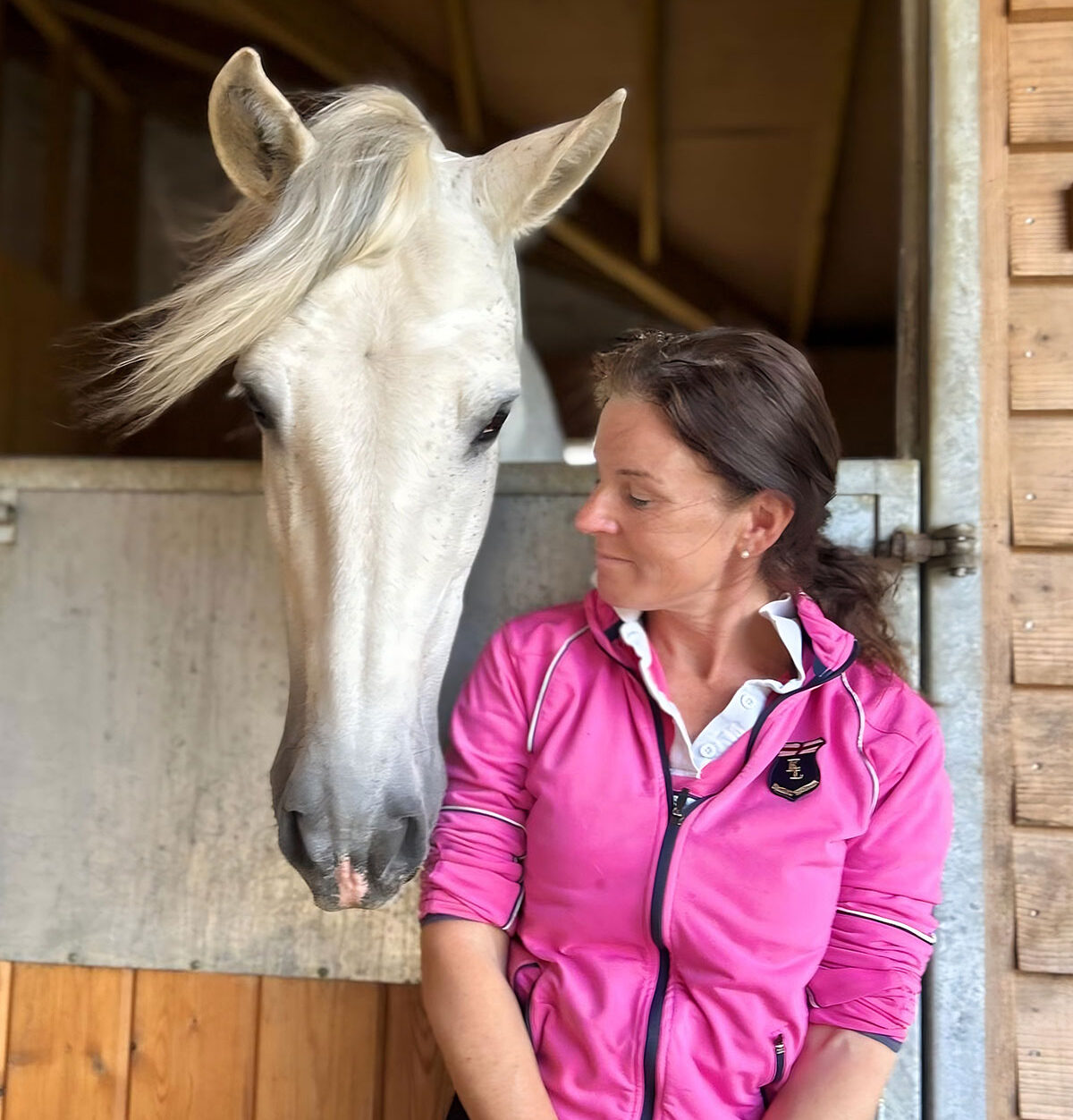
Katherine Watters in The Buying Solution equestrian kit sat on steps of horsebox

Higher livery costs will continue to impact demand

As the cost of livery has risen sharply so, too, has the demand for equestrian properties and I expect to see that continue throughout 2026.

You can now expect to pay anything up to £1,500 a month for full competition livery on a yard with comprehensive facilities; a significant cost, particularly if you have more than one horse. Many yards have stopped offering DIY or assisted DIY/part livery as they have found that it is simply not viable from a cost perspective.

The reason for this price rise is two-fold. The industry has long relied on low-paid, often cash-in-hand labour, but new rules ensuring proper contracts, benefits and working conditions have significantly increased staffing costs. The cost of hay this year has also gone through the roof, as a result of drought conditions earlier in the year reducing crop yields, and increasing production costs.

Two recent clients took a long-term view and combined their home with private facilities, employing their own staff rather than paying escalating livery bills. One had dreamed of seeing her horses from the kitchen window – now she finds it genuinely more cost-effective to keep her own yard.

More property decisions will hinge on geography and planning

2026 will see no change in the enduring core geographical hotspots for each discipline. A lot of event riders, professionals and owners choose the M40 corridor as a geographical base for its access around the country. While the polo fraternity often focus their attentions around Ascot and Windsor in Berkshire for Guards Polo Club, or the Midhurst area in West Sussex for the annual Gold Cup season held at Cowdray Park.

The areas around Lambourn in Berkshire and Newmarket in Suffolk remain the heart of UK racing, where many trainers favour the topography for both training facilities and stud farms.

Dressage riders are more geographically dispersed and I am seeing them increasingly follow the European norm of requiring an indoor school with full facilities. Yet exceptional houses with equally strong equestrian facilities are extremely rare. So as more people consider building their own, I expect that in 2026 we will see search priorities shifting from location to planning feasibility.

It’s important to remember, however, that equestrian planning is complex and local councils – especially those with a National Park – rarely favour large-scale development. This is why it’s vital to work with a specialised planning expert who can assess existing facilities, outbuildings, agricultural ties and land use, to fully understand long-term potential. I work with an excellent independent planning consultant who can identify required changes of use and plan facilities that meet Local Policy Frameworks.

Access to UK ports has long been important to professional riders and in 2026 we will see this becoming increasingly significant for serious amateurs, with all disciplines benefiting from strong European circuits and prize money.

Katherine Watters - a woman in blue outfit riding a black horse in a competition

We will continue to see cyclical demand, particularly in the rental market

The British Eventing circuit runs from March through to the end of October and is considered one of the best in the world, thanks to our renowned Badminton and Burghley 5-star events.

I am often contacted by riders or their Federations seeking a UK base to buy or rent for three- to four-year cycles while campaigning for Olympic or World Equestrian Games selection, and I expect to see this cyclical demand continuing throughout 2026.

The polo fraternity also used to be quite cyclical. Yet with rising travel costs, many patrons now seek permanent UK bases and winter their ponies here, rather than moving teams of up to 100 horses and 25 grooms between tours. I expect to see this becoming ever-more popular in areas like Sussex and Surrey where it can be a significant six-month income stream for landowners.

Rising investment in the equestrian sector will filter down

Investment in equestrian competition in the UK is increasing and I expect that it will only continue to climb throughout 2026. We are seeing evermore significant sponsorship deals of the most prestigious showgrounds and events filtering through the sector. The BBC has started to put equestrian sports back on their mainstream schedule now, too; proof of increasing popularity and interest. If you ask any equestrian enthusiast, it was never Christmas until Olympia was on the television!

I also expect to see a continued rise in interest in UK breeding, building on the record-breaking sport horse auction sales and growing demand from wealthy global investors, particularly in the high-end market.

The Brilliance Auction, Breen Equestrian and the Billy Stud auctions have secured Britain’s place on the global sport horse auction map.

We will see a growing demand for legacy properties

Equestrian property continues to be a smart long-term investment and throughout 2026 I expect to see more buyers creating legacy establishments, especially in breeding.

The key factors in legacy value are those you cannot change: location and access. Even horsebox size can determine viability – country lanes, overhanging trees, gate widths and turning circles all matter. The tiniest details have to be carefully considered.

Land quality, facilities, infrastructure, potential for expansion and adaptability, as well as legal and financial due diligence also remain key.

Katherine Watters smiling after competing on a brown horse

There will be even greater need for specialist guidance

With ever more complexities in the market and a limited supply of best-in-class opportunities, having impartial, expert guidance for buyers will be more important than ever in 2026.

For many, equestrian terminology can feel like a foreign language, which is why it’s vital to have a specialist who can decipher the nuances of each discipline and the distinctly different facilities that it requires.

It’s also important to be aware that many of the finest equestrian properties are sold off market, or at least access is private. In close-knit areas, properties often change hands behind closed doors, making it crucial to have specialist representation to help you to infiltrate those circles.

While there are some excellent selling agents specialising in equestrian properties, there remain very few buying agents with the required depth or breadth of knowledge. I’ve been around horses all my life – from Pony Club to owning horses competing at the World Equestrian Games, Badminton and Burghley, and time based in professional yards with Olympic riders. Having worked with and helped many riders, owners and patrons, as well as national federations, I have a comprehensive understanding of both private and commercial set-ups and the nuances of each.

Ultimately, equestrian purchases are about more than facilities: they are about the quiet solitude of time with horses. As Churchill said, “There is something about the outside of a horse that is good for the inside of a man.”

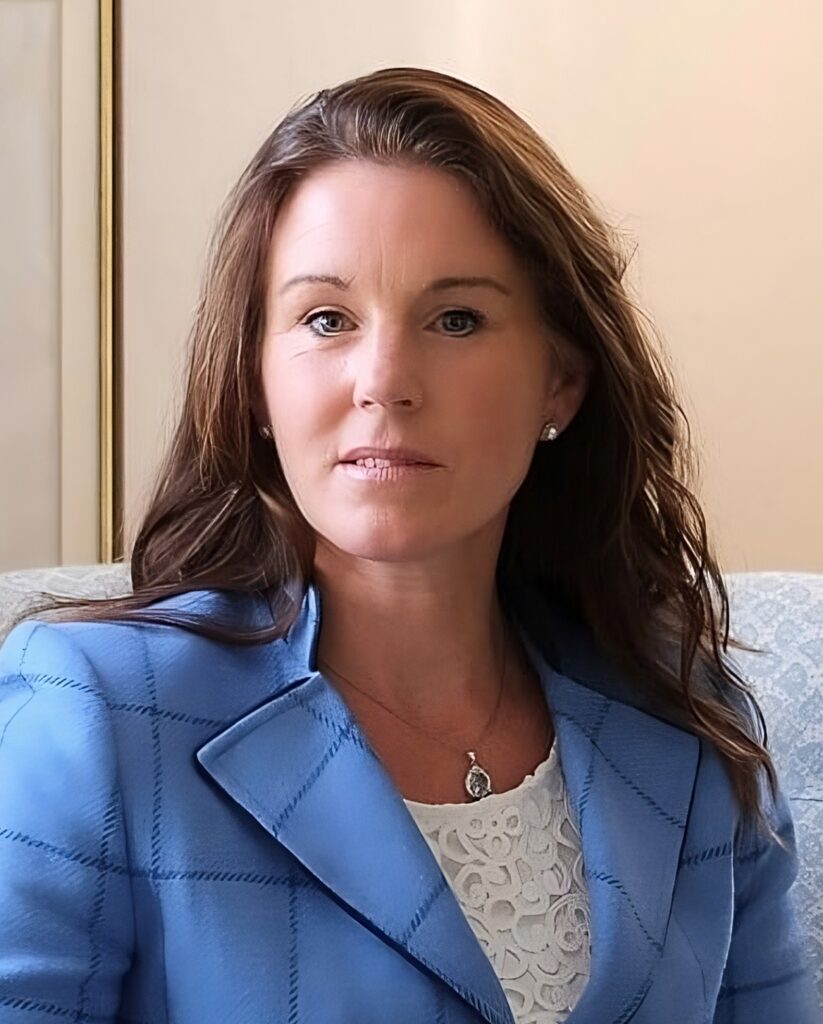
Woman in blue suit jacket with long brown hair looking at camera

Katherine Watters is our equestrian expert and specialist Partner for the Southern Home Counties

For news, expert commentary and invaluable property insight, subscribe to The Insider, our quarterly newsletter, here.

Moving to the Home Counties: How To Find Your Perfect Place

The move from London to the Home Counties is a well-trodden path, and for good reason. With beautiful countryside, vibrant market towns and excellent schools and connectivity, the region offers balance. Our Partner Katherine Watters shares how she helps clients to navigate this journey, turning overwhelming property searches into clear, confident decisions about where – and how – to start their next chapter.

The Surrey Hills

Leaving London has long been a rite of passage for many families. The search for more space, cleaner air and stronger community ties draws buyers outwards each year, tracing familiar paths along the commuter lines that fan into the Home Counties. Yet, for all the talk of good schools and train times, the success of such a move often hinges less on geography than on guidance.

Our Partner Katherine Watters has built a powerful reputation for helping clients navigate this most emotionally charged of transitions. “We often meet people who know they need to be within an hour of London, but they have no idea where to base themselves,” says Katherine. “That’s when we’ll take them on orientation tours – two or three days of exploring different counties, villages and schools. It’s about helping them understand how each area feels before they commit.”

The approach is as much about education as it is about property. Clients are introduced not only to houses but to lifestyles – bustling market towns and quiet hamlets, the realities of rural broadband, the subtleties of train routes. “We’re not selling anything,” Katherine adds. “We’re guiding, helping people imagine the reality of their new life, and then gently making that vision real.”

The Enduring Appeal of the Home Counties

The reasons for moving to the Home Counties remain remarkably consistent. For most families, it comes down to schools, commutability, and a sense of belonging. People want their children to have space and a great education, but they don’t want to feel cut off.

The Home Counties are incredibly diverse. You can have 1930s family houses in one village and 17th-century cottages two miles away. That variety means there’s something for everyone – the key is knowing where to look. Surrey’s gated estates, from Cobham to Oxshott, offer privacy and proximity for those making their first step out of London. The Surrey Hills and villages south of Guildford appeal to buyers seeking a more rural way of life but still within a 45-minute train ride of Waterloo. Northwards, the Chilterns and Thames Valley blend riverside life with market-town sophistication.

For many clients, familiarity plays a decisive role. “It’s amazing how often people return to where they grew up,” Katherine observes. “You hear, ‘My parents lived here’ or ‘My best friend has just moved there.’ That sense of connection gives people confidence to move and means that they will often find like-minded people who have made a similar move themselves.”

Chiddingfold, Surrey

The London Connection

Although working patterns have evolved, London remains the gravitational centre for many of Katherine’s clients. Some need to be in the office two or three days a week; others just want to be close enough for dinner, theatre, or the airport. Either way, the Home Counties keep them within reach.

“A lot of clients come to me feeling overwhelmed,” explains Katherine. “They’ve got property alerts from half the Home Counties and no real direction. We bring focus. It’s about saying: if you need to be in Holborn, and you love countryside walks, let’s look at the Guildford line, not the South Downs. We turn the noise into a plan.”

A Market Maturing Gracefully

After the feverish years of 2021–22 and the pandemic premiums, both Katherine describes the Home Counties’ current market as steadier and, in many ways, healthier. “Buyers are more measured,” says Katherine. “They’re asking questions, doing due diligence, and taking advice. Gone are the days of throwing money at anything with a garden.”

People who overpaid in haste are discovering the importance of context: flight paths, road noise, village amenities. Sensible pricing and good research are back in vogue.

This shift plays perfectly to our strengths as buying agents. “We’ve always taken a forensic approach,” says Katherine. “We’ll check planning histories, school catchments, infrastructure changes – all the details that can make or break a property’s value. That’s where clients see real return on advice.”

The Human Side of the Search

Beyond logistics and market data lies the human dimension. Katherine has spent years working face-to-face with clients, often over months of searching and decision-making. “We’re often with clients at quite pivotal life stages: moving from London with young children, returning from abroad, or downsizing after decades in one place. It’s not just about finding a house. It’s about helping them visualise the life they want next.”

That sensitivity allows The Buying Solution to deliver a service both personal and pragmatic, making that search for a home smoother, smarter and far more enjoyable.

Woman in blue suit jacket with long brown hair looking at camera

Katherine Watters is our specialist Partner for the Southern Home Counties

For news, expert commentary and invaluable property insight, subscribe to The Insider, our quarterly newsletter, here.

What to Consider when Buying an Equestrian Property

Purchasing an equestrian property is not just an investment in financial terms, but in the lifestyle it brings. In the latest issue of The View by Knight Frank, our Partner Katherine Watters shares her insight into what to consider when searching for the ideal home for you and your horse.

“Different equestrian sports and disciplines require differing types of facilities and land,” advises Kat, an equestrian specialist with vast experience both as a lifelong rider and a buying agent. “Understanding the difference is absolutely vital to providing the best solution for our clients.”

Read more here.

The Buying Solution in the Evening Standard

The Buying Solution’s Will Watson speaks to the Evening Standard about why Londoners are returning back to the city following the pandemic.

Read more here

The Buying Solution in The Times – Commuter belt crush: why everyone wants to buy in the suburbs

To read more, visit: https://www.thetimes.co.uk/article/commuter-belt-crush-why-everyone-wants-to-buy-in-the-suburbs-hpztngc2d