Is Buying for Children Still a Smart London Property Play?

Parental-led purchases have always formed a significant part of the prime London market. But right now, the logic behind them feels more persuasive than ever – and in some cases, more urgent. The fundamentals are as strong as they have always been, while the context around them has shifted in ways that genuinely favour buyers who are ready to move, write our Partner James Burridge.

Two teenagers looking at phone with father and smiling. Buying property for children.

Why the Case Remains Strong

Around 20% of my active requirements at any one time come from clients buying property for their children. That proportion has remained consistent, and the reasons families pursue these purchases are essentially the same as they always were: a desire to provide security, a long-term view on wealth, and a recognition that London property – the right London property – is a reliable store of value.

What has changed is the environment in which these transactions are taking place. We are in a period of genuine uncertainty. Politically and economically, there is a great deal of noise. And when the world feels uncertain, good bricks and mortar in a good location feels like a safe place to park significant capital, particularly over the long term.

A More Motivated Market

Another notable shift in the current market is the behaviour of sellers. Some properties have been on the market for a year or more, and many sellers have missed opportunities as a result. A family in Wandsworth wanting to move to the country, for instance, may have found that they couldn’t sell their London house quickly enough to secure the property they wanted elsewhere. That creates real pressure to transact.

For our clients – predominantly cash buyers who can move without a chain and without debt – this is a powerful position to be in. When the majority of competing buyers are in their mid-twenties to mid-thirties, first-time buyers, relying on mortgage offers, the ability to offer flexibility and certainty is a real advantage. We can negotiate on price, offer quick completions, or in some cases even allow a short leaseback period. In a market where sellers are more focused than they have been in years, buyers with firepower can find that the market rewards them.

That said, I wouldn’t suggest there are runaway capital gains to be had in the near term. The appeal here is not a quick uplift. It is quality, liquidity and location – and knowing that good property in the right part of London will always let well in the interim and serve the next generation well when the time comes.

Budget, Locations and the Long Game

I consistently tend to see families searching for properties within the £2 to £5 million price range. What continues to evolve is the conversation around which areas offer the best value at that price point.

I am currently helping a family buy the second of four properties in London, each for a different child. The choice of area is largely driven by the children themselves, not the parents. One wanted to be near where they grew up, another had a strong desire to live in a more central location. That is fairly typical.

It is a conversation I have regularly with parents: the relative value of one pocket versus another. Three million pounds in Fulham looks very different to three million pounds in Notting Hill. In Fulham, you are more likely to get a proper house with a garden. In Notting Hill, you are paying a premium for the postcode. The young person moving in rarely sees it that way, of course. They want to be in the thick of it. But in ten years, when they have children and need more space, the one who took the house in Fulham will be grateful they did not have to pay stamp duty twice.

Transport links also continue to be a significant factor in these searches. For young people in their twenties, connectivity matters enormously, and parents are increasingly attuned to that.

Why Freeholds Make Sense

The preference for freehold houses over leasehold flats has, if anything, become more pronounced in recent times. There are no service charges, no building management committees to deal with, no unexpected bills for lift repairs or communal area renovations. It is a cleaner investment in every sense.

That said, we have bought individual freehold houses for multiple children before, with both living in the property together. In one case, the elder sibling lives there with a friend, and the younger one collects rent from that friend until they are ready to move in. It is a practical arrangement, and it works when the family dynamic supports it.

Inheritance Tax Planning

Inheritance tax planning is increasingly in the background of these conversations – and in many cases it has moved firmly to the foreground. Putting a property in a child’s name removes that capital from the parent’s estate. For families with significant assets, that is a meaningful consideration.

The awareness that a £2 or £3 million property purchase can serve simultaneously as a home for their child, a rental investment, and an estate planning tool is something that sophisticated buyers are carrying into these conversations.

The Journey Takes Time

One point worth emphasising, and something I stress to every client at the outset: finding the right property takes time. The volume of genuinely good stock is smaller than it once was because fewer people are choosing to move. That means the search for a house in Fulham, for example, is not a three-month exercise. From initial brief to taking keys, twelve months is a more realistic expectation.

If parents are serious about this, the time to start the conversation is now – not when their child is six months from finishing university.

The Enduring Appeal

The emotional dimension of these purchases is as present as it always was. Parents want to know that their children are safe, that they are not renting from a landlord they have never met, and that there is some family oversight of where and how they are living. That instinct has not shifted.

Nor has the satisfaction of seeing it through. There is something particularly rewarding about returning to a property we bought for a teenager, years later, and finding them settled in a home they have made their own. When a family comes back to us for the next child, and the one after that, it says everything about the trust that this kind of work builds. It is genuinely rewarding.

As I said at the outset, the fundamentals have not changed in recent years. If anything, the combination of motivated sellers, experienced buyers with liquidity, and the enduring quality of prime London property makes the case for buying for your children stronger today than it has been for some time.

James Burridge The Buying Solution

James Burridge is our Partner and Prime Central London and South West London specialist

For news, expert commentary and invaluable property insight, subscribe to The Insider, our quarterly newsletter, here.

Where to Find a Village Way of Life in South-West London

With its vast green parks and commons, lively communities and historic charm, south-west London provides a village feel alongside plenty of luxury amenities – and its popularity is booming. Our Partners James Burridge and Toto Lambert explain more.

Wider houses, larger gardens, high-performing schools, off-street parking and fast connections into both central London and Heathrow make south-west London’s ‘villages’ highly desirable neighbourhoods.

“Considering the steep rise in stamp duty, those searching for a generational family home should be looking for a space that they can grow into, not out of – where they can stay for the next decade plus. Gardens being more important than ever.

“Value-wise, the south-west pocket is becoming a lot more interesting and offers breathing space from the fast pace of central London,” says our Partner and London specialist James Burridge.

Richmond

Richmond offers both stately riverside elegance and more tranquil countryside calm, thanks to Richmond Park – one of the largest urban parks in Europe. Its Georgian townhouses, smart period villas and grand detached homes attract families looking for space and community.

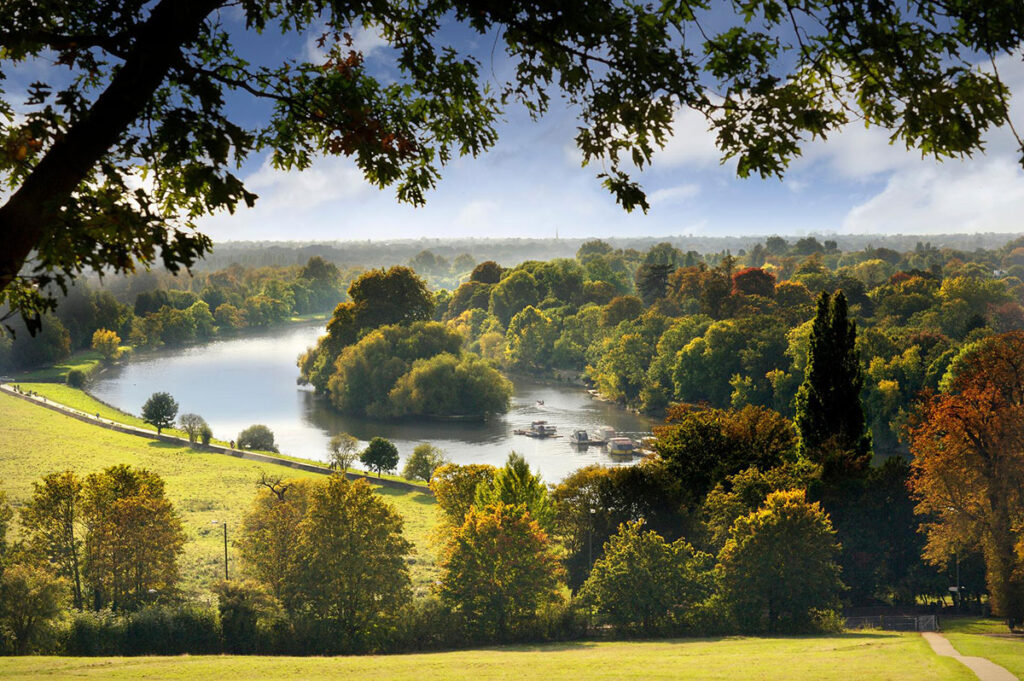
The celebrated view of the tree-lined Thames from Richmond Hill – the most desirable enclave of Richmond, popular with everyone from rock stars to playwrights – wouldn’t look out of place in the Chilterns. Yet its fast rail links and Elizabeth Line connections via Twickenham make it an easy commute into central London.

Pedestrianised streets such as Paved Court and the smaller lanes leading past Wisteria-clad Georgian houses to the Green offer a village feel. While the likes of Petersham Nurseries with its Michelin Green Star restaurant, Scott’s Richmond seafood restaurant on the riverside and nearby Ham Polo Club ensure an air of luxury.

“I worked with a lovely couple over the Summer who were moving to London from America. They didn’t know the prime South-West London villages well, but knew they wanted to immerse themselves in a strong sense of community. We looked at a few different areas, landing on Richmond. We secured them a beautiful home there with amazing green space all around them,” says James.

Barnes

Further east, tucked into a bend in the river, Barnes is another favourite with its duck pond, farmers’ market, handsome period streets and riverside walks. “It feels very akin to a Sussex village,” says James.

Venture into the heart of Barnes Common Nature Reserve or the London Wetland Centre and you feel far removed from the busy city, yet access to central London is quicker than many expect – just 25 minutes to Waterloo.

Lots of people own dogs here and there are many scenic walks to enjoy with them, together with thriving independent shops including a butcher, cheese shop, wine merchants and bookshop. Barnes is also very well served by high performing state and independent schools, such as the Harrodian, St Paul’s School and the international Swedish School and which serve as a huge draw to the area.

Wimbledon Village

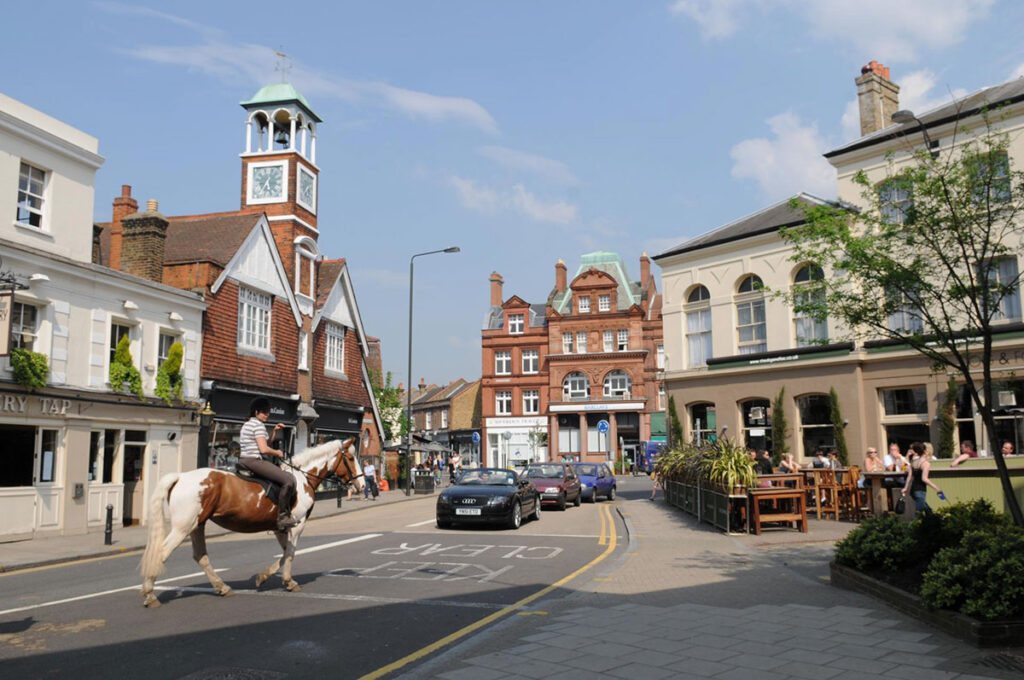
Further south, Wimbledon Village next to the charmingly rural Common is home to low-ceilinged traditional pubs, horse riding stables, a nature reserve and a weekly farmers’ market – as well as some of the most desirable homes in south-west London.

The streets leading off the Common are among its most coveted, with everything within an easy distance – from muddy wooded trails and bridleways in one direction, to designer shops in the other.

Wimbledon offers fantastic schools, such as Kings’ College School Wimbledon, open green spaces and community all within striking distance of the City. There’s no shortage of luxury here either, with The Ivy Café, the Royal Wimbledon Golf Club, a Third Space health club and, of course, the world-renowned All England Lawn Tennis Club

Horse crossing the road in Wimbledon Village, South-West London

Fulham and Parsons Green

Across the Thames, Fulham and Parsons Green have seen a quiet transformation in recent years. Once considered a more affordable alternative to Chelsea, these areas now command significant premiums, especially around the Green itself and Peterborough Estate.

The housing stock here – a mix of Victorian terraces and large family houses – has become particularly attractive to young families moving out of more central areas. Doria Road and St Dionis Road, leading towards the leafy green, are very pretty and popular addresses.

“Fulham’s Alphabet Streets that form a grid running between Fulham Palace Road and the river offer beautiful Victorian houses with larger gardens and wide proportions. The green space of Bishops Park and the Thames Path is on your doorstep – ideal for walking, running and cycling,” says our Partner and London specialist Toto Lambert, who lives in Fulham. “And there are plenty of dog-friendly cafes and traditional pubs in the area. Tinto Coffee on Fulham Palace Road being a personal favourite.”

Dulwich Village

Strictly south-east London, Dulwich Village offers a slightly more off-the-radar option, but one that punches well above its weight with its Georgian architecture, strong community spirit, even local riding stables.

The renowned Dulwich Picture Gallery houses works by Gainsborough and Rembrandt and hosts a weekly farmers’ market in its grounds. There are top schools on its doorstep, including Dulwich College and James Allen’s Girls’ School – the oldest independent girls’ school in London – and it is also very well connected.

“Areas like Dulwich Village have increased in demand with clients of ours over the past decade. I recently acted for a young family moving out of East London looking for a family home with a good garden, so the search was very much house led. We looked at Barnes, Richmond and Wimbledon before settling in Dulwich. We bought a house within walking distance of Dulwich Village because they fell for its village-like charm,” says James.

James Burridge is our specialist Partner in Central and South-West London. Read more from James on the rise of south-west London’s prime market here.

Toto Lambert, The Buying Solution Partner, London

Toto Lambert is our specialist Partner in Central and South-West London.

For news, expert commentary and invaluable property insight, subscribe to The Insider, our quarterly newsletter, here.

The Rise of South-West London’s Prime Market

Expansive family homes, generous gardens, green spaces and no shortage of luxury amenities; prime property in London’s south-west pocket is more desirable than ever. Our Partner, James Burridge, explains what’s driving the recent surge in activity, where to find the area’s most exceptional properties and how to seal success in this complex market

Once rather dismissively labelled ‘suburbia’ by our grandparents, who would have questioned our sanity in moving out of Kensington or Chelsea, south-west London has been experiencing a surge in activity in recent times – and for good reason.

A large part of the appeal of south-west London is that its housing stock is more in keeping with the way we want to live. Houses here are lower, wider and with larger gardens and there are less strict planning controls than in central London. A standard townhouse in Chelsea is around 16ft wide. Go to Richmond or Wimbledon and you’ll see 40ft wide houses with 100ft gardens and off-street parking. In central London you’d have to pay north of £20m for that amount of space; in Wimbledon it can be half that, or even less depending on where you’re looking.

The ‘villages’ in this corner of the capital retain a sense of community and character alongside an abundance of green, open spaces – all within easy reach of central London. And you’re not devoid of luxury here. Restaurants such as Scotts Richmond – sister restaurant to its Mayfair stalwart – Michelin-starred Trinity in Clapham and Chez Bruce in Wandsworth are perennially popular. Recent openings such as luxury health club Third Space in Wimbledon and family-friendly members’ club Jesse’s House in Parsons Green further elevate these already affluent areas.

Increasing numbers of buyers are now wising up to the area’s charm. According to the Coutts Prime Property Index for Q1 2025: “Much of the current activity is being driven by needs-based buyers, those looking in traditional family homes markets, in outer-prime markets such as Battersea, Clapham and Wandsworth and Wimbledon, Richmond, Putney and Barnes.”

The majority of my clients here are looking for large family homes to be their primary residence and the area’s renowned independent schools, such as Kings’ College School Wimbledon and St Paul’s School in Barnes, as well as several leading international schools, remain a key draw. The new co-educational Thomas’s College on Richmond Hill, opening in September, is further evidence of increasing demand. Securing a school place here now needs to be considered years in advance.

The good news is that there is more stock than there’s ever been, but the market is thin when it comes to best-in-class properties that require no work. Buyers who only want to be on Richmond Hill and spend between £4-6m, for example, will find that there’s very little to choose from. Encompass a wider area taking in Richmond, Barnes and St Margarets, and you suddenly have far more opportunities.

It is also becoming more of a global market. With its close proximity to Heathrow, the area is attracting growing interest from buyers from Western Europe, the Middle East, America, China and India. If we look a decade ahead, I think south-west London will be home to a far more international population – on a par with central London.

South-West London’s most Desirable Roads

Wimbledon’s most popular pockets are the roads off the Common, from where you can explore the heath and woodland on foot, bicycle or horseback and easily walk into the village. You can also walk down into the town to get the train into central London.

The streets between Wandsworth and Clapham Commons are also very popular, especially with young families. The area known as the ‘Toast Rack’ (named after its shape on a map) between Trinity Road and Wandsworth Common has substantial late 19th century houses, some of which back on to the Common, as well as fast connections into central London.

Richmond Hill remains the most desirable enclave of Richmond, noted for its celebrated view of the Thames [pictured at the top], as well as its famous residents over the years. Rockers Ronnie Wood and Pete Townsend have each owned the iconic Georgian mansion The Wick, while Mick Jagger and playwright Richard Sheriden are both previous owners of nearby Downe House. Across the river, houses backing on to the Trust Grounds of St Margarets have huge appeal. Owners have a key to the resident-only 12-acre gardens where there are lakes and tennis courts.

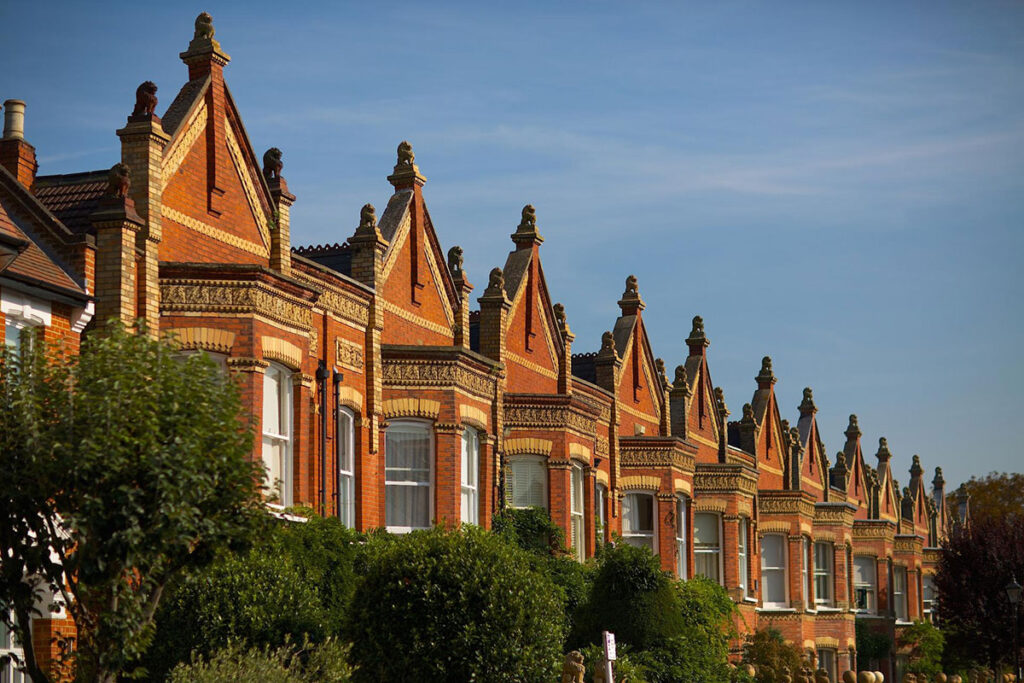
In Fulham, the Peterborough Estate conservation area – known for its distinctive red brick ‘Lion Houses’ – have long been popular. There’s also a perfect little pocket between Eel Brook Common and The White Horse and from Parsons Green down to New Kings Road. The Fulham market, in the mainstay, tops out at £4m-4.5m, but pricing is still very strong in these areas for good properties on the right roads. Houses that were £1,300 per sq ft, are now trading for £1,450 or even £1,500 per sq ft.

Further west in Barnes, properties close to the pond and large houses on Lonsdale Road with views of the river are among the most desirable. You will also find some exceptional classical villas on Castlenau. Once a very busy road, it now benefits from the indefinite closure of the Hammersmith Bridge to motor vehicles, making it much quieter.

Successful Purchases, Happy Clients

We recently secured a beautiful semi-detached house in Wimbledon Village for a couple who were downsizing. Initially set on something turnkey, they shifted their expectations due to limited stock — and with our support, are now working with an excellent team to renovate their new home in a prime, walkable location.

In Clapham, we acquired an almost 5,000 sq ft family house on one of the area’s best roads off the Common, off-market and through sealed bids. Properties of this scale and potential rarely come up – it’s a once-in-a-generation house and the kind of opportunity I see only once every couple of years.

And in Fulham, we have recently purchased an exceptional 4,000 sq ft house over looking green space for a family seeking a wide, low-built house with a large garden and off-street parking. We viewed it before it came to market and, with just a handful of such homes in the area, it’s a rare and exceptional find.

How to Stay Ahead in South-West London

It’s important to keep in mind that it takes longer than you think to find what you’re looking for in south-west London – a move could take up to 18 months. Without a high volume of stock, it takes a long time to get your eye in. You may need to see a dozen houses across a number of ‘villages’ to know if it’s where you want to be and it could take six months to see six good houses. There are even fewer houses available that don’t require any work.

That said, there are a lot of good buyers, so when the right thing comes along and the timing is right for our client, we have to act quickly – particularly as most of the stock that we see isn’t on the open market.

This means ensuring that our clients are exceptionally well informed, so that they have the knowledge and confidence to act swiftly when the opportunity arises.

James Burridge is The Buying Solution’s Partner in London

For news, expert commentary and invaluable property insight, subscribe to The Insider, our quarterly newsletter, here.