Why are English Villages So Appealing?

English villages come into their own in summer, but the desire to live there has year-round draw. Our Partner Katherine Watters explores why the appeal of a village is not simply about nostalgia, but a sense of community, continuity and belonging.
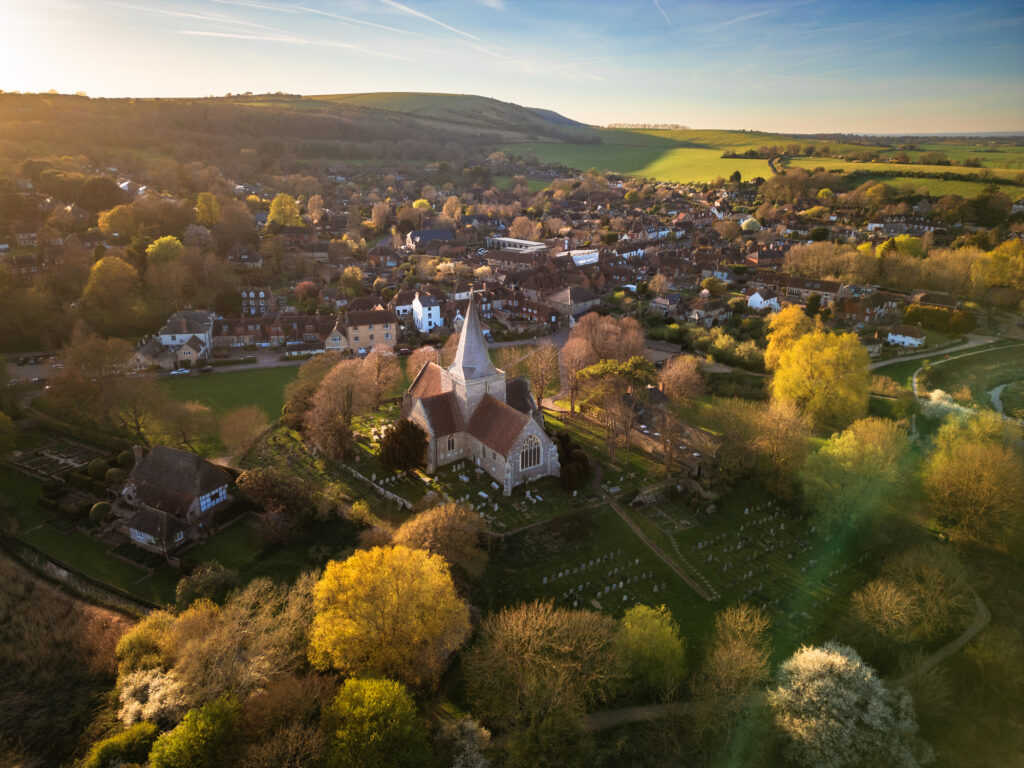
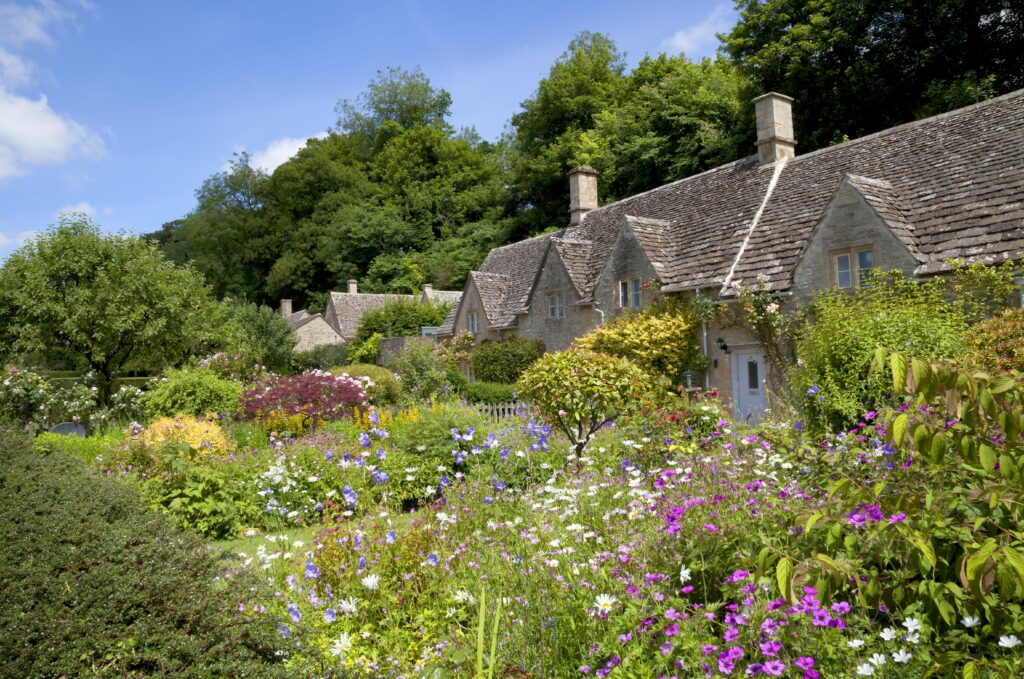
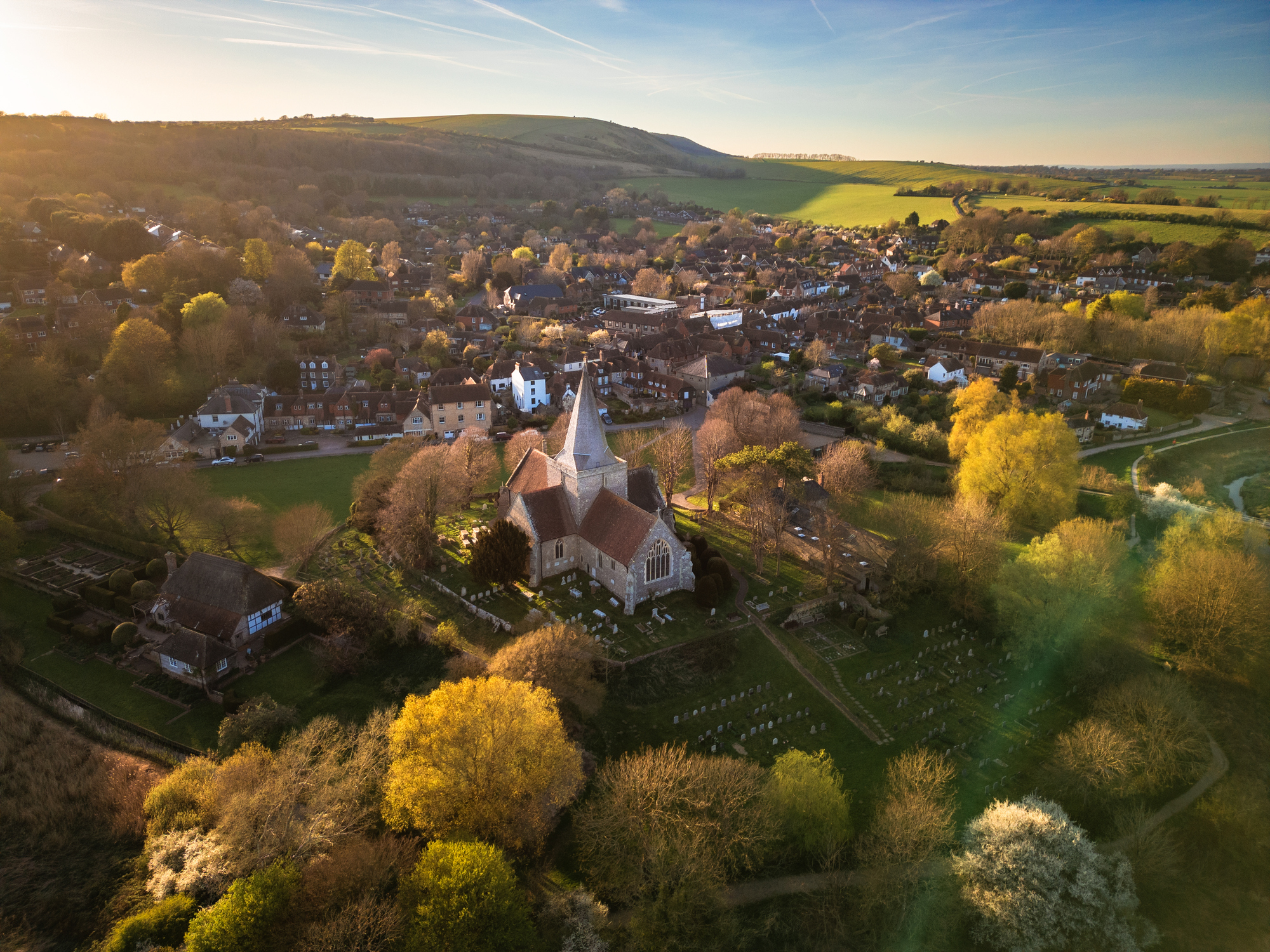
There is an image of England that never quite loses its hold on the imagination, especially during the summer months. Cricket on the green on a balmy afternoon. A fête in full swing complete with tug of war, a dog show and a cake stall stacked with Victoria sponges baked by the locals. Cottages with roses around the door. An ancient church that has been central to the community for generations.

The English village is, on one level, a romantic ideal. And yet it is also a very real and vital part of modern life – not simply as an archetypal symbol of Englishness, but as a place people of all ages and backgrounds continue actively to choose to live.

As a buying agent working across Surrey, Sussex and the wider Home Counties, I spend much of my time driving clients through villages they have never visited before, watching for that almost imperceptible shift in mood when they arrive somewhere that feels right. It is rarely about the house alone. The decisive moment often comes when they spot the cricket green, the pub terrace filling up on a Friday evening, or a queue forming outside the village shop.

“On the edge of a village” is one of the most common requests I hear. Clients generally do not want total isolation in a remote farmhouse at the end of a muddy track. The fantasy – and increasingly, the practical ambition – is a house close enough to walk to the pub, the shop, the church and the community.

After many years acting for buyers, I have come to recognise that when clients say they want village life, they are rarely talking purely about scenery or commute times. What they are searching for is something more consequential: connection, familiarity and being part of a community.

The post-pandemic search for connection

The appetite for village life has only strengthened since the pandemic. According to the Government’s latest Statistical Digest of Rural England, net internal migration continues to favour rural areas, with more people moving from towns and cities into the countryside than the other way around. Meanwhile, according to Nationwide Building Society, house prices in predominantly rural areas rose by 23 per cent between 2019 and 2024, compared with 18 per cent in predominantly urban areas. (nationwide.co.uk) What began as the “race for space” has matured into something more lasting: a search for connection.

Clients rarely describe it in those terms initially. They talk about wanting their children outdoors more, or about needing more space or a better view. Yet those requests often carry an unspoken concern about modern life: the sense that people can feel profoundly lonely while surrounded by millions of others.

I see this particularly among buyers seeking to move out of London. While they may have lived in the capital for years, they feel the transitional nature of city living prevents them from putting down roots properly. Increasingly, they are looking for what villages still offer remarkably well: interdependence.

One family I am advising is moving with an elderly mother who has lived an extremely social life in London and is understandably anxious about leaving it behind. Their brief is not simply about square footage or proximity to a station. They want a village where she can integrate quickly; somewhere with a church community, local groups and enough activity to make day-to-day life feel engaging and interesting. 

This desire for both connection and ‘buzz’ spans generations. Young families are drawn by toddler groups, village schools and the chance for their children to grow up as part of a small community. Downsizers increasingly see villages as a form of future-proofing: places where they can walk to amenities, remain socially active and rely on local support networks if driving eventually becomes difficult.

The infrastructure of belonging

The best villages function almost like miniature ecosystems. The village shop is no longer merely somewhere to buy milk. Increasingly, it has become a deli, café and informal social club rolled into one.

Having been used to the convenience of the city, clients moving from London often fear a sense of being “cut off” when they move to the country. They yearn for a focal point. During a client orientation tour, I always make a point to take them to a village coffee shop to assuage these fears and more often than not, I see a smile of relief cross their faces as they recognise the sense of a like-minded community. One client laughed in delight when she discovered her former favourite barista from London now co-owned the local village café we stopped at. Suffice to say, they went on to buy in that village.

On another client tour, we stopped at a village shop in Dunsfold, south-west Surrey. Behind the till was an old school friend of mine who volunteers there now her children have grown up. “I wanted to give something back to the community,” she told me. That spirit of participation rather than passive consumption is exactly what many buyers are searching for.

The village pub occupies a similar emotional territory. The best rural pubs understand they cannot survive purely as polished gastronomic destinations. They still want muddy dogs under tables, farmers nursing pints at the bar and regulars dropping in for a pie and a catch-up with friends over a glass of wine.
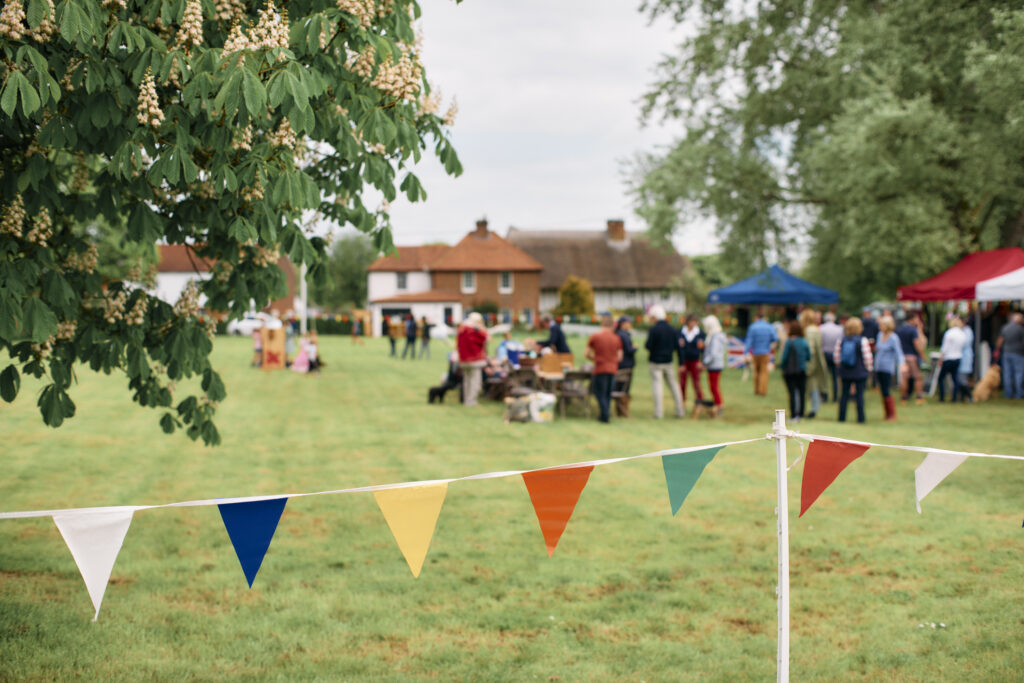
UK, Hertfordshire, Perry Green, close up of Bunting hanging in front of outdoor celebrations in a field

The perennial charm of the village fête

There is a nostalgic element to all this. Villages embody a version of England many people fear is disappearing, yet the local fête remains one of the clearest expressions of communal life in modern Britain.

I often encourage nervous London buyers to visit a village during its fête weekend if they want to understand what life there could actually feel like. You see everything in a single afternoon: the volunteers, the children tearing across the green, the retirees pouring tea and the committee members trying to organise the raffle.

Not only are fêtes charming, they are also remarkably democratic occasions. One of the things clients often find most refreshing is the levelling effect of village life. At a fête, a highly successful businessman may be hammering tent pegs into the ground alongside a local builder or teacher. Everyone contributes, which is key.

Villages do not simply “happen”. Their appeal relies on people willing to organise, volunteer and participate. In fact, many long-standing residents welcome newcomers precisely because they bring fresh energy. The stereotype of rural suspicion towards outsiders is often overstated. In reality, villages benefit enormously from people willing to coach football teams, listen to local school children read, run plant stalls or join parish committees.

Why village schools are becoming more attractive

Schools remain another powerful draw. Many buyers moving from London initially assume they will continue down the private-school route, but that is beginning to shift. The combination of rising fees and VAT changes has prompted many families to reconsider local state education.

Some village schools that once operated mixed-age classes now run full single-year intakes because demand has grown so dramatically. Parents value the intimacy of smaller schools and the way they embed families into local life almost immediately.

Community as a modern luxury

The appeal of village living also reflects wider social anxieties. Britain has become more digitally connected yet, in many ways, less communal. Hybrid working means many professionals spend long stretches of time alone at home.

Villages, by contrast, still create natural points of contact. There are opportunities to bump into a neighbour while out dog walking. There are WhatsApp groups organising lifts to hospital appointments for elderly residents. Volunteer drivers take neighbours to GP surgeries. Rambling clubs gather at cafés after walks. Church halls host everything from yoga classes to children’s parties. These details may sound quaint, but they are increasingly valuable in a fragmented society.

Seeing village life at its most authentic

As buying agents, our role extends well beyond property. A beautiful house in the wrong village will rarely make a client happy long-term. Understanding whether a community is sociable and intergenerational matters just as much as understanding square footage and commute times.

In an age when so much of modern life can feel transient and anonymous, the English village still offers the reassuring possibility that people might genuinely know – and look after – one another.

Woman in blue suit jacket with long brown hair looking at camera

Katherine Watters is our specialist Partner in the Southern Home Counties
Buying in the Cotswolds? Call Harry Gladwin

With series 2 of Rivals shining the spotlight on the Cotswolds once again, Lucy Clayton reports for the Financial Times on the region’s specialist agents to know when buying a home here. Our Partner and Head of the Cotswolds Harry Gladwin is one of them.

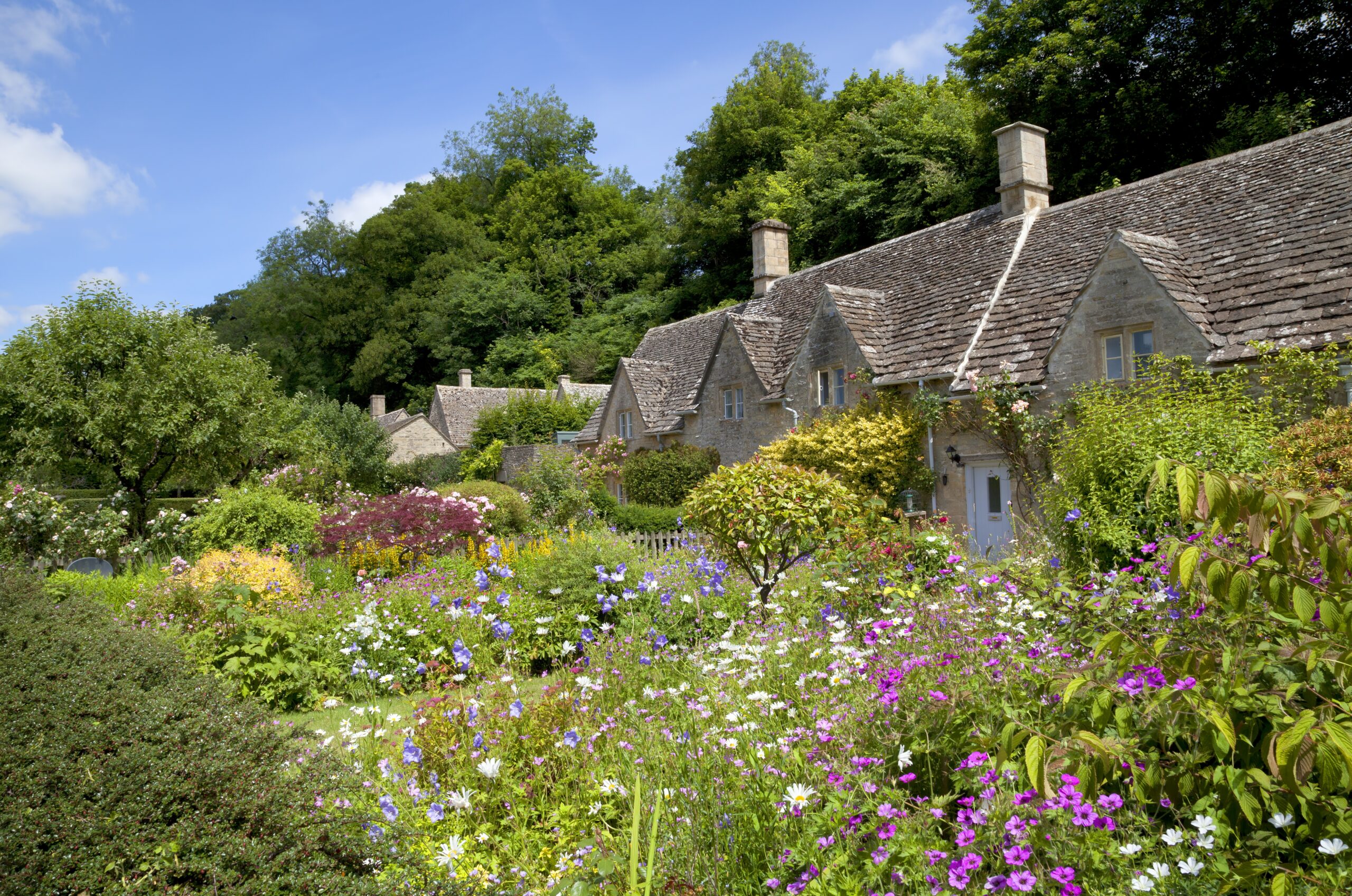
Cotswold cottage in the popular tourist destination of Bibury, Gloucestershire, England.

The Cotswolds remains one of England’s most coveted regions, drawing international buyers and fierce local competition in equal measure. As a result, Lucy Clayton writes in the Financial Times, buying here has become “a complex dance.”

With the most sought-after properties off-market and unsold for generations, the right buying agent isn’t a luxury – it’s essential. “Access is only guaranteed by an extraordinary reputation for trust and discretion – with or without an NDA,” says our Partner Harry Gladwin, as the FT collates the Who’s Who of the Cotswold’s finest specialist agents.

Read the article here.

Is Buying for Children Still a Smart London Property Play?

Parental-led purchases have always formed a significant part of the prime London market. But right now, the logic behind them feels more persuasive than ever – and in some cases, more urgent. The fundamentals are as strong as they have always been, while the context around them has shifted in ways that genuinely favour buyers who are ready to move, write our Partner James Burridge.

Two teenagers looking at phone with father and smiling. Buying property for children.

Why the Case Remains Strong

Around 20% of my active requirements at any one time come from clients buying property for their children. That proportion has remained consistent, and the reasons families pursue these purchases are essentially the same as they always were: a desire to provide security, a long-term view on wealth, and a recognition that London property – the right London property – is a reliable store of value.

What has changed is the environment in which these transactions are taking place. We are in a period of genuine uncertainty. Politically and economically, there is a great deal of noise. And when the world feels uncertain, good bricks and mortar in a good location feels like a safe place to park significant capital, particularly over the long term.

A More Motivated Market

Another notable shift in the current market is the behaviour of sellers. Some properties have been on the market for a year or more, and many sellers have missed opportunities as a result. A family in Wandsworth wanting to move to the country, for instance, may have found that they couldn’t sell their London house quickly enough to secure the property they wanted elsewhere. That creates real pressure to transact.

For our clients – predominantly cash buyers who can move without a chain and without debt – this is a powerful position to be in. When the majority of competing buyers are in their mid-twenties to mid-thirties, first-time buyers, relying on mortgage offers, the ability to offer flexibility and certainty is a real advantage. We can negotiate on price, offer quick completions, or in some cases even allow a short leaseback period. In a market where sellers are more focused than they have been in years, buyers with firepower can find that the market rewards them.

That said, I wouldn’t suggest there are runaway capital gains to be had in the near term. The appeal here is not a quick uplift. It is quality, liquidity and location – and knowing that good property in the right part of London will always let well in the interim and serve the next generation well when the time comes.

Budget, Locations and the Long Game

I consistently tend to see families searching for properties within the £2 to £5 million price range. What continues to evolve is the conversation around which areas offer the best value at that price point.

I am currently helping a family buy the second of four properties in London, each for a different child. The choice of area is largely driven by the children themselves, not the parents. One wanted to be near where they grew up, another had a strong desire to live in a more central location. That is fairly typical.

It is a conversation I have regularly with parents: the relative value of one pocket versus another. Three million pounds in Fulham looks very different to three million pounds in Notting Hill. In Fulham, you are more likely to get a proper house with a garden. In Notting Hill, you are paying a premium for the postcode. The young person moving in rarely sees it that way, of course. They want to be in the thick of it. But in ten years, when they have children and need more space, the one who took the house in Fulham will be grateful they did not have to pay stamp duty twice.

Transport links also continue to be a significant factor in these searches. For young people in their twenties, connectivity matters enormously, and parents are increasingly attuned to that.

Why Freeholds Make Sense

The preference for freehold houses over leasehold flats has, if anything, become more pronounced in recent times. There are no service charges, no building management committees to deal with, no unexpected bills for lift repairs or communal area renovations. It is a cleaner investment in every sense.

That said, we have bought individual freehold houses for multiple children before, with both living in the property together. In one case, the elder sibling lives there with a friend, and the younger one collects rent from that friend until they are ready to move in. It is a practical arrangement, and it works when the family dynamic supports it.

Inheritance Tax Planning

Inheritance tax planning is increasingly in the background of these conversations – and in many cases it has moved firmly to the foreground. Putting a property in a child’s name removes that capital from the parent’s estate. For families with significant assets, that is a meaningful consideration.

The awareness that a £2 or £3 million property purchase can serve simultaneously as a home for their child, a rental investment, and an estate planning tool is something that sophisticated buyers are carrying into these conversations.

The Journey Takes Time

One point worth emphasising, and something I stress to every client at the outset: finding the right property takes time. The volume of genuinely good stock is smaller than it once was because fewer people are choosing to move. That means the search for a house in Fulham, for example, is not a three-month exercise. From initial brief to taking keys, twelve months is a more realistic expectation.

If parents are serious about this, the time to start the conversation is now – not when their child is six months from finishing university.

The Enduring Appeal

The emotional dimension of these purchases is as present as it always was. Parents want to know that their children are safe, that they are not renting from a landlord they have never met, and that there is some family oversight of where and how they are living. That instinct has not shifted.

Nor has the satisfaction of seeing it through. There is something particularly rewarding about returning to a property we bought for a teenager, years later, and finding them settled in a home they have made their own. When a family comes back to us for the next child, and the one after that, it says everything about the trust that this kind of work builds. It is genuinely rewarding.

As I said at the outset, the fundamentals have not changed in recent years. If anything, the combination of motivated sellers, experienced buyers with liquidity, and the enduring quality of prime London property makes the case for buying for your children stronger today than it has been for some time.

James Burridge The Buying Solution

James Burridge is our Partner and Prime Central London and South West London specialist

For news, expert commentary and invaluable property insight, subscribe to The Insider, our quarterly newsletter, here.

Would You Move to Pay for Private School Fees?

To pay for private school fees, growing numbers of families are rethinking where they live rather than compromise on their children’s education, reports Alexandra Goss in The Telegraph. It’s a trend that our Cotswolds buying agent Georgina Neil is seeing first hand, as she highlights in the article.

Sarah Frances Kelley Cotswold manor house The Buying Solution
Sarah Frances Kelley for The Buying Solution

Rising school fees, following the addition of VAT, are redefining property decisions – especially above £1.2m, reports Alexandra Goss in The Telegraph.

“The dream is over for many ‘upsizers’ as school fees and the cost of running these homes – and the transactional costs of buying them in the first place – have become prohibitive for many,” our Cotswolds buying agent Georgina Neil comments in the article.

Read the article in full here.

Old Barns, New Profits: Why Farmers are Embracing Padel

With the rapid rise of padel across the UK, agricultural landowners are finding innovative ways to generate income – including converting redundant barns into high-demand sports facilities, reports Cathy Hawker in the Financial Times, with insight from Harry Gladwin.

Many farmers are facing sustained pressure on margins, as our Partner and Head of the Cotswolds Harry Gladwin highlights in the Financial Times. Repurposing underused buildings – whether for padel courts or other commercial uses – offers a practical way to create supplementary income while preserving the integrity of rural estates.

Examples such as Padel X at Todenham Manor Farm near Moreton-in-Marsh, Punk Padel at Grammarsham Farm near Basingstoke and The Padel Farm York are leading the way.

“Most farmers would prefer to focus purely on farming but margins have been compressed for some time,” Harry says in the report. “For estates with redundant or underused buildings, repurposing them for alternative uses — whether that’s padel courts, car storage, cafés or gyms — can provide meaningful supplementary income without materially changing the character of the holding.”

Read the full article here.