As more and more of us install smart, connected gadgets in our homes, are we actually making ourselves vulnerable to security breaches from our own tech, asks David Byers in The Times. Our Partner and Head of the Cotswolds region Harry Gladwin shares his insights.
The home tech industry has grown significantly in recent years and is projected to be worth almost $140 billion by 2032, the research firm MarketsandMarkets says, with people buying wifi-connected vacuums, ovens, doorbells, garden lights – and even internet-connected wine coolers, reports David Byers for The Times.
But is an over-reliance on tech the modern equivalent of leaving the front door unlocked? “We are seeing a distinct shift in preference among prime buyers who are increasingly concerned about the digital vulnerabilities of fully automated homes,” Harry Gladwin says in the piece.
For internationally mobile families, education and lifestyle are driving relocation decisions more than ever. Demand for top-tier schools, combined with privacy, space and security, is putting the Home Counties firmly in focus, writes Jemma Scott, our Partner and North Home Counties specialist, who also shares her tips for a successful relocation.
Recent global events have brought a new seriousness to the relocation conversation. What were once lifestyle-led considerations – schooling, security and space – are now sitting firmly at the top of the priority list, and everything else is being filtered through them.
Decisions are no longer being made lightly, or purely aspirationally, but with a far greater emphasis on what day-to-day life will actually look like once the move is made. I recently visited a house whose owners had everything in motion to relocate to Dubai, before global tensions prompted them to abruptly pull on the brakes. That crystallised the shift for me. When you are talking about moving children internationally, even to places that might once have felt like an obvious upgrade, the fundamentals come into very sharp relief.
Security, schooling, health and stability are now the most pressing questions, not the afterthoughts. I’m often asked what I’m seeing in the market for relocating families, and because I’m constantly speaking to agents, applicants and buyers across the sector, you develop a very clear read on sentiment rather than simply tracking numbers.
Right now, that sentiment is measured. There is no frenzy, no pandemic-style urgency, but there is steady, considered movement. My client base is a mix of families moving out of London and those returning or relocating from overseas, often prompted by a reassessment of priorities in uncertain times. It is not a boom market, but it is an active one, and it carries a very particular tone.
In that mindset, even the most traditional of settings – a vicarage in a pretty English village, a house set within an established market town – can suddenly feel newly relevant and reassuring.
Security: reassurance in different forms
Security comes up in almost every conversation, but rarely in the same way twice. There are clients for whom it is entirely practical and visible. They want cameras, alarm systems, secure perimeters all in place from day one. For them, security is paramount and provides the peace of mind they crave.
Then there is another group, often relocating from places such as the US or South Africa, who are moving away from environments where security is highly visible. For them, the appeal of the Home Counties is almost the opposite: it feels calm, established and understated. A prime residential road in a buzzy market town or a well-established village community are often seen as inherently reassuring, without needing to be fortified.
Against a backdrop of broader uncertainty elsewhere – whether environmental, political or insurance-related – the UK begins to feel comparatively stable and attractive.
Schooling: the anchor decision
If security sets the tone, schooling sets the geography. For many families, it is the starting point of the entire search.
The briefs are often highly specific. Some want walkability; with a station, café and school all within reach. Others are comfortable with a 15–20 minute drive to secure space and countryside. Others still prioritise privacy above all else, letting the school determine the radius of their search.
International schools remain important for globally mobile families seeking continuity and institutions such as ACS International Schools continue to play a key role in that space. But what has changed is permanence. More families are no longer here for a short posting; they are settling.
As a result, engagement with the UK independent sector is shifting, with schools such as Eton College, Bradfield College, St Andrew’s and Lambrook in Berkshire; Charterhouse in Surrey, Shiplake College in Oxfordshire, and Godstowe and Wycombe Abbey in Buckinghamshire increasingly forming part of a longer-term life plan, rather than a transitional arrangement. Even international schools are now focusing on local, long-term students, as that transitional world has changed.
The home, school and office triangle
At the centre of almost every relocation is what I call the triangulation: home, school and office. Each carries equal weight. One pays the bills; one educates the children, and one is where family life comes together. The challenge is that they rarely align neatly.
A beautiful house in a rural setting may stretch the school run. A perfect school catchment may complicate access to London. A fast commute may come at the expense of space and lifestyle.
People often underestimate how these elements interact in real life. Door-to-desk commuting, school runs, train timetables, return journeys all compounds for better or worse. Much of my role in the Home Counties is helping clients see not just the property, but what their life there would really look and feel like.
Space, nature and what “enough” looks like
There is also an emotional layer that runs through almost every search. Clients often talk about wanting their children to be “in nature”. Though slightly intangible, it is a very real driver. Green space, gardens and countryside access are consistently part of the brief.
The Home Counties offer this in abundance, but it is important to understand what that lifestyle actually means day to day. More rural living often means more driving. School friends live in different directions and daily logistics become more complex. Larger homes, pools, tennis courts, annexes and staff can all add lifestyle value but also cost and maintenance.
A large part of the process is helping clients separate what feels aspirational from what will genuinely improve everyday life.
Renting, buying and the shift towards commitment
Traditionally, renting has been the first step for many relocating families. In theory, it allows people to explore and experience areas before committing. In practice, outside London, the reality is very different.
The rental pool in the Home Counties is limited at the best of times. Once you factor in school catchments and specific location requirements, it becomes even narrower.
What often happens is compromise: families take what is available, rather than what is right. They then build a life with schools, routines and networks only to realise they would prefer a different base when they come to buy.
As a result, more clients are choosing to purchase earlier and get it right first time. It is more decisive, but often more aligned with long-term happiness.
Ultimately, the most successful relocations are those where clients acknowledge early on what they are leaving behind and are then far better placed to recognise what they stand to gain. When that balance is right, the move stops being purely practical and becomes something more positive and joyful.
Relocation: how to do it well
1. Start with lifestyle, not property
Define your lifestyle before you look at properties. Rural vs. town, privacy vs. walkability, and whether London is a daily or occasional commute all matter more than the details of any single listing. You can change the house – you can’t change its location.
2. Treat home, school and office as one system
If one corner of the triangle of home, school and office is misaligned, everything else becomes harder to sustain.
3. Research schooling early
School choice will define your location more than anything else. Shortlist the schools you think would best suit your child before narrowing property areas.
4. Be honest about travel time
Always consider the full journey – home to station, train and onward travel – and what you want that to look like. Not just isolated segments.
5. Work with local experts
Online listings rarely, if ever, tell the full story. Micro-location, road noise, school run traffic and pricing nuance require expert local knowledge.
6. Be realistic about space and scale
British homes often differ from overseas properties in style, size and electrical systems so consider what truly suits your next stage of life. Shipping oversized items like a 20ft dining table or Texan barbecue may prove costly and impractical.
7. Budget for the reality of country living
Maintenance, staffing and security all add to ongoing costs and should be factored in early.
8. Be cautious about relying on renting outside London
Supply is limited. Renting to ‘try before you buy’ can sometimes introduce compromise rather than clarity.
9. Think long term, not transitional
The most successful relocations are rarely short-term experiments. A longer horizon tends to produce better decisions.
10. Make peace with trade-offs and define the gain
Every move involves loss. That might be climate, space, lifestyle, familiarity or proximity to other global centres. But it also involves gain: better schooling, more space, a different pace of life, and often a greater sense of stability. The key is to hold both in view at the same time.
Jemma Scott is The Buying Solution’s Partner in the North Home Counties
For news, expert commentary and invaluable property insight, subscribe to The Insider, our quarterly newsletter, here.
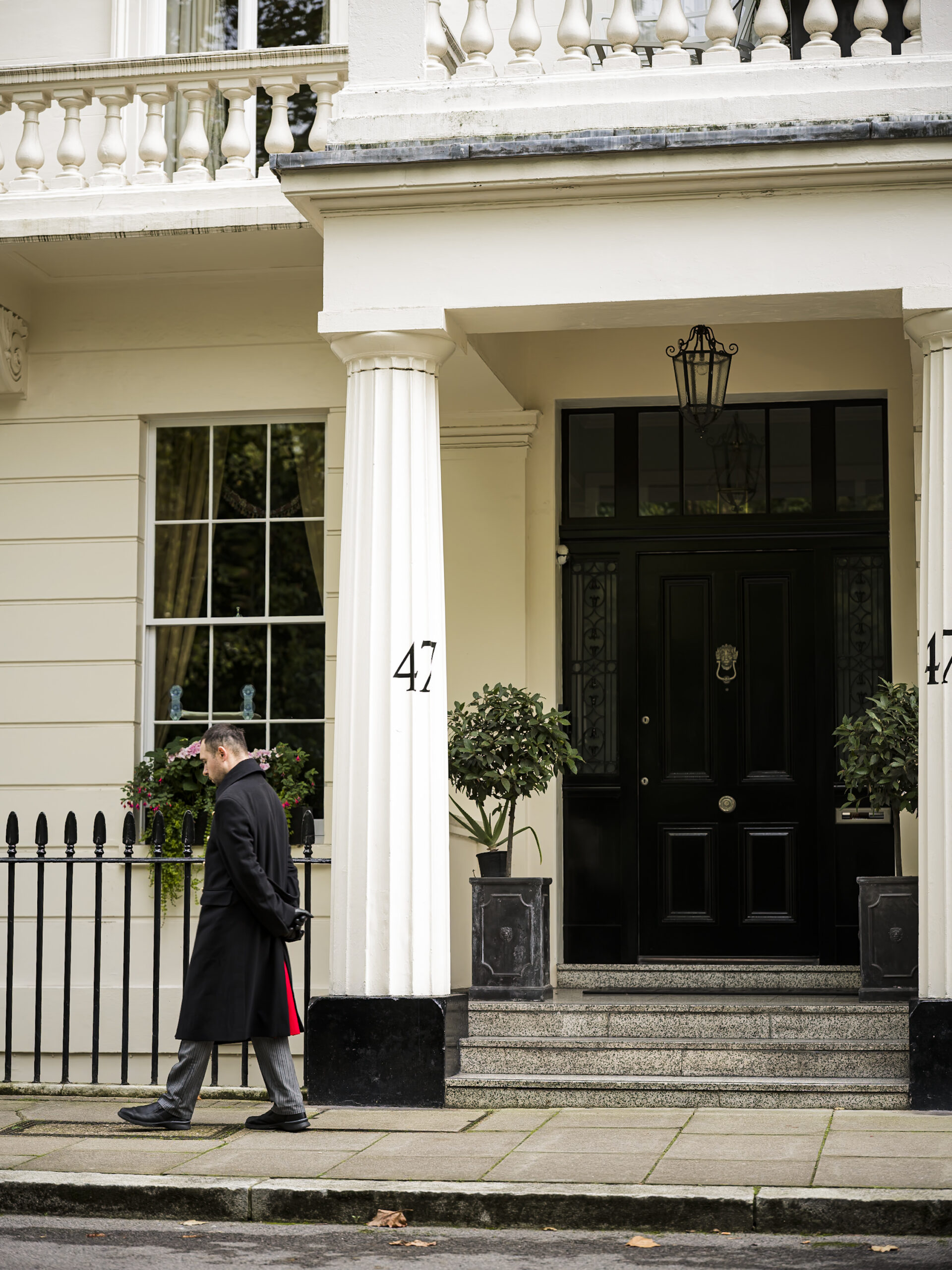
As crime headlines reshape perceptions of life in the capital, security has become an integral part of the property brief for buyers in prime central London. Yet the most effective safeguard is not technology or patrols, but discretion – both online and at home, writes our Partner and London specialist Philip Eastwood.
Sarah Frances Kelley for The Buying Solution
For much of the past two decades, the brief given to a prime central London buying agent has been reassuringly familiar: lateral space, period architecture, a garden square address, perhaps proximity to the best schools. Security, when mentioned at all, tended to mean little more than a functioning alarm system and a sturdy front door.
Today, that brief has evolved. Increasingly, security – and perhaps, more accurately, the perception of security – forms part of the conversation when clients consider purchasing property in the capital.
The reality, however, is more nuanced than the headlines might suggest. According to new analysis from the Mayor’s Office for Policing and Crime (MOPAC), many forms of crime in London are falling. In the first quarter of the 2025/26 financial year, residential burglary fell by 10 per cent compared with the same period the previous year, while theft from the person and personal robbery both declined by 13 per cent. These reductions follow increased investment in visible neighbourhood policing, including a significant uplift in officers on the beat in the West End and new town centre teams focused on tackling phone theft, shoplifting and antisocial behaviour.
Yet statistics rarely shape perceptions as powerfully as stories do. In an age of constant news alerts and social media feeds, a single incident can travel quickly through friendship circles and WhatsApp groups. Before long, everyone seems to know someone – or knows someone who knows someone – who has had a phone snatched or a watch stolen. The result is that security has begun to feature more prominently in property discussions, even as the broader data paints a more reassuring picture.
The Rise of the Discreet Street Patrol
One of the more visible developments can be seen in parts of Kensington and Chelsea, where residents of certain streets have collectively arranged private security. Typically, a security guard sits in a marked car overnight, occasionally walking residents from a taxi to their front door, keeping an eye on the street and acting as a visible presence and possible deterrent. Some patrols circulate periodically, sometimes with dogs, providing reassurance and peace of mind rather than enforcement. The effect is closer to the traditional “bobby on the beat” than to anything resembling private policing.
Fifteen years ago, such arrangements were uncommon. Today, they are increasingly familiar in prime neighbourhoods and in some cases, they are linked to large estates. Addresses on the Grosvenor Estate in Mayfair and Belgravia, for instance, benefit from long-established porterage and security systems – part of the discreet infrastructure that has historically made certain London squares particularly desirable.
Portable Wealth in a Digital Age
Part of the shift in how people think about security reflects something fundamental about how we now live. Twenty years ago, most people moved through London carrying relatively little of obvious value. A watch was simply a watch; a handbag was simply a handbag. Even if something was stolen, it was not always easy to sell on, nor was its value necessarily understood by the thief.
Today, however, we move through the city carrying what might reasonably be described as ‘portable assets’ as a matter of course: smartphones worth more than a month’s rent, watches whose resale values can exceed those of a car, handbags that prestigious auction houses now treat as investment categories.
The secondary market has expanded dramatically. Where once stolen goods required a discreet “fence” to sell them on, today a host of online platforms provide an immediate and global marketplace for resale. The economics of crime have changed.
At the same time, our digital habits have created an entirely new layer of exposure. Social media has normalised the public display of wardrobes, jewellery collections and travel plans to a global audience. From a security perspective, it is rather remarkable.
Announcing a two-week holiday on Instagram is, in effect, the modern equivalent of placing an advertisement that reads: Our house will be empty until the 14th. Posting photographs of newly acquired luxury items performs a similar function. With modest effort, someone inclined to do so can identify where photographs were taken, determine neighbourhoods and piece together patterns of movement.
For high-net-worth individuals in particular, managing one’s digital footprint has therefore become an increasingly important element of personal security. In many cases, it matters more than cameras or alarm systems. Discretion, therefore, remains the most effective safeguard of all.
Technology is No Silver Bullet
Clients may ask whether technology can offer a definitive answer. Smart doorbells, integrated alarm systems, remote monitoring, camera networks – the modern home can certainly be equipped with formidable security infrastructure. Many properties in prime London now include these features as standard.
Yet there is no technological silver bullet. Cameras may deter some criminals but are likely to just send determined ones next door. Alarm systems can reduce risk, but they do not eliminate it. Even the most sophisticated digital systems carry their own vulnerabilities. What’s to say they won’t be hacked? Security, ultimately, needs a layered approach, rather than a single solution.
Discreet Measures
The most effective measures tend to be the least visible. A well-positioned safe. A cautious approach to exterior lighting to prevent advertising the superior finish or interior of the house. Careful vetting of contractors and staff, and sensible habits around the display – both real and digital – of valuables.
Sometimes it is as simple as having two safes rather than one, a precaution adopted in certain households in case of forced entry. More extreme measures do exist, of course. Panic rooms, private bodyguards and other forms of high-end protection are certainly present in London. But they remain the exception rather than the rule, and when they are used, they are handled with the utmost discretion. Indeed, the defining characteristic of those who invest seriously in security is that they rarely talk about it.
A City That Remains Remarkably Liveable
None of this should be mistaken for alarmism. London today is, in many respects, far safer than it was in previous decades. Areas once considered marginal or even dangerous have become some of the city’s most desirable addresses – Notting Hill is a case in point. Neighbourhoods that would once have raised eyebrows now command extraordinary property prices.
Crime has always existed in large cities. What has changed is the way it is reported, discussed and perceived. We now live in an era of continuous information. Every incident, however small, can appear instantly on a news feed. The effect is cumulative: a sense that problems are everywhere, even when the broader picture is more reassuring.
A salient lesson for how quickly perceptions of safety can shift can be learned from Dubai. For years the emirate was held up by many international buyers as the ultimate safe haven: low crime, strong policing and a lifestyle where valuables could be worn or left in plain sight without concern. Some London residents even relocated there in search of precisely that sense of security.
Yet recent geopolitical tensions in the wider region have served as a terrible reminder that no global city exists entirely in isolation from risk. For internationally mobile families, it has reinforced a broader truth: safety is rarely absolute. Rather, it is a question of perception, context and prudent personal judgement – whether in London, Dubai or anywhere else.
The First Rule of Security
For property buyers navigating this environment, the advice is surprisingly simple. Choose a well-run building or a well-organised street. Invest in sensible security measures. Be thoughtful and careful about digital exposure. Above all, practise discretion.
The most effective form of security is rarely the most visible. It is the firm decision not to advertise what one owns, where one lives or when one is away. In prime London property, that principle has become part of the modern brief. And, in truth, it always was.
Despite reports that Tom Cruise has left his London home over security fears, Spear’s magazine suggests that rising crime in the capital is not prompting a mass exodus. Instead, it is influencing how buyers in London’s wealthiest postcodes assess both property and personal security when choosing a home. Featuring insight from our London Partner, Philip Eastwood.
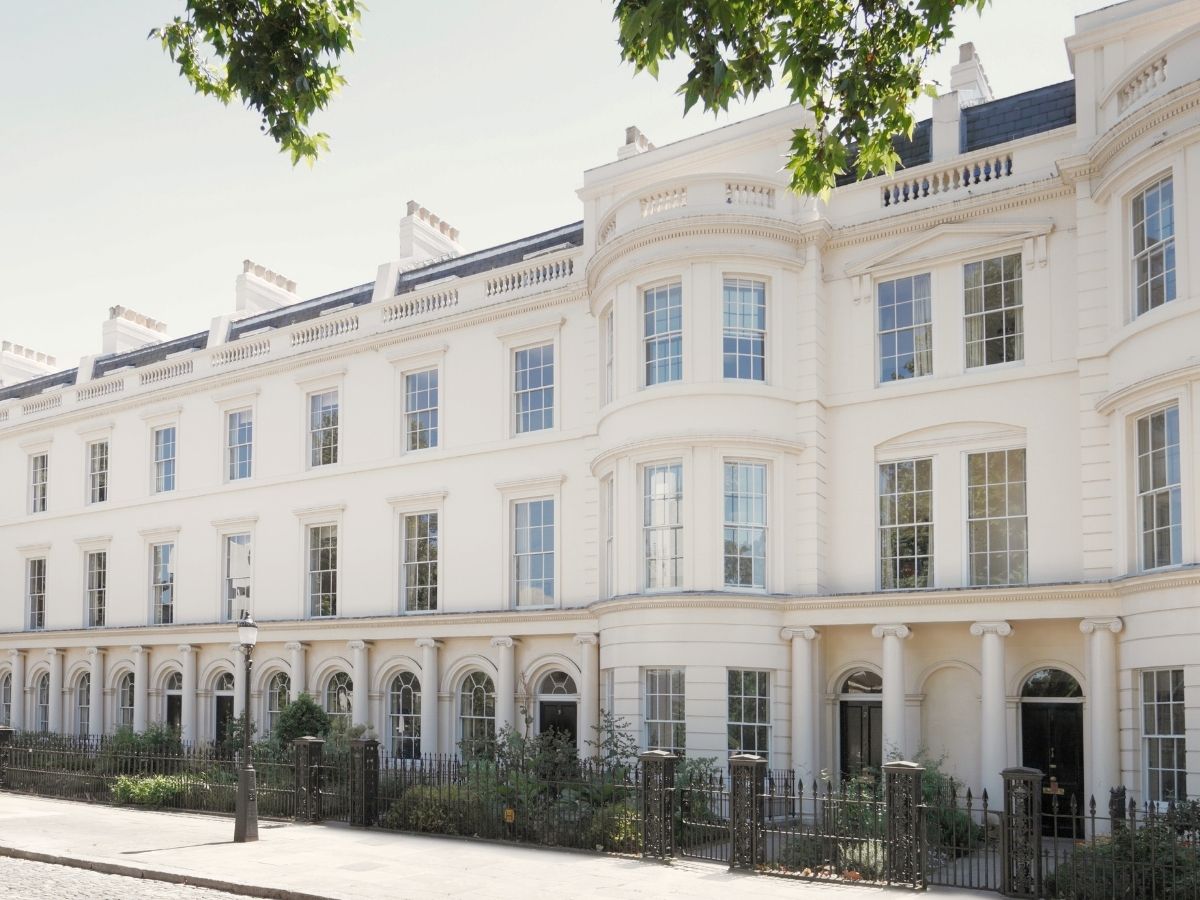
Exclusive Central London homes close to Regent’s Park.
Whether prioritising homes on secure streets or collectively funding private security, crime levels in London are influencing high-value property searches, reports Christian Maddock in Spear’s magazine. Featuring insight from our highly experienced Partner and London specialist, Philip Eastwood, the report explores why rising crime rates in the capital are prompting HNWs to seek enhanced security options rather than leave the city altogether.
We use cookies to improve user experience and analyze website traffic. By clicking “Accept,” you agree to our website’s cookie use as described in our Cookie Policy.
This website uses cookies to improve your experience while you navigate through the website. Out of these, the cookies that are categorized as necessary are stored on your browser as they are essential for the working of basic functionalities of the website. We also use third-party cookies that help us analyze and understand how you use this website. These cookies will be stored in your browser only with your consent. You also have the option to opt-out of these cookies. But opting out of some of these cookies may affect your browsing experience.
Necessary cookies are absolutely essential for the website to function properly. These cookies ensure basic functionalities and security features of the website, anonymously.
Cookie
Duration
Description
cookielawinfo-checkbox-analytics
11 months
This cookie is set by GDPR Cookie Consent plugin. The cookie is used to store the user consent for the cookies in the category "Analytics".
cookielawinfo-checkbox-functional
11 months
The cookie is set by GDPR cookie consent to record the user consent for the cookies in the category "Functional".
cookielawinfo-checkbox-necessary
11 months
This cookie is set by GDPR Cookie Consent plugin. The cookies is used to store the user consent for the cookies in the category "Necessary".
cookielawinfo-checkbox-others
11 months
This cookie is set by GDPR Cookie Consent plugin. The cookie is used to store the user consent for the cookies in the category "Other.
cookielawinfo-checkbox-performance
11 months
This cookie is set by GDPR Cookie Consent plugin. The cookie is used to store the user consent for the cookies in the category "Performance".
viewed_cookie_policy
11 months
The cookie is set by the GDPR Cookie Consent plugin and is used to store whether or not user has consented to the use of cookies. It does not store any personal data.
Functional cookies help to perform certain functionalities like sharing the content of the website on social media platforms, collect feedbacks, and other third-party features.
Performance cookies are used to understand and analyze the key performance indexes of the website which helps in delivering a better user experience for the visitors.
Analytical cookies are used to understand how visitors interact with the website. These cookies help provide information on metrics the number of visitors, bounce rate, traffic source, etc.
Advertisement cookies are used to provide visitors with relevant ads and marketing campaigns. These cookies track visitors across websites and collect information to provide customized ads.