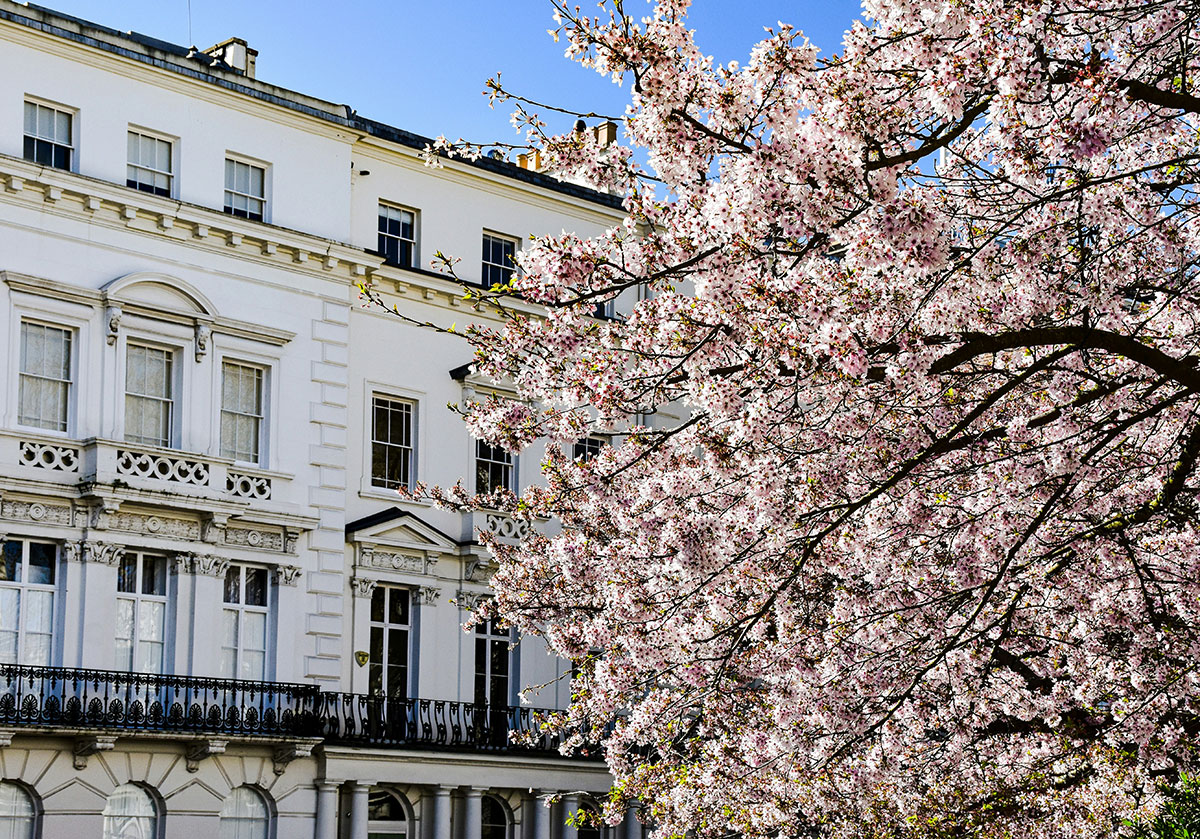
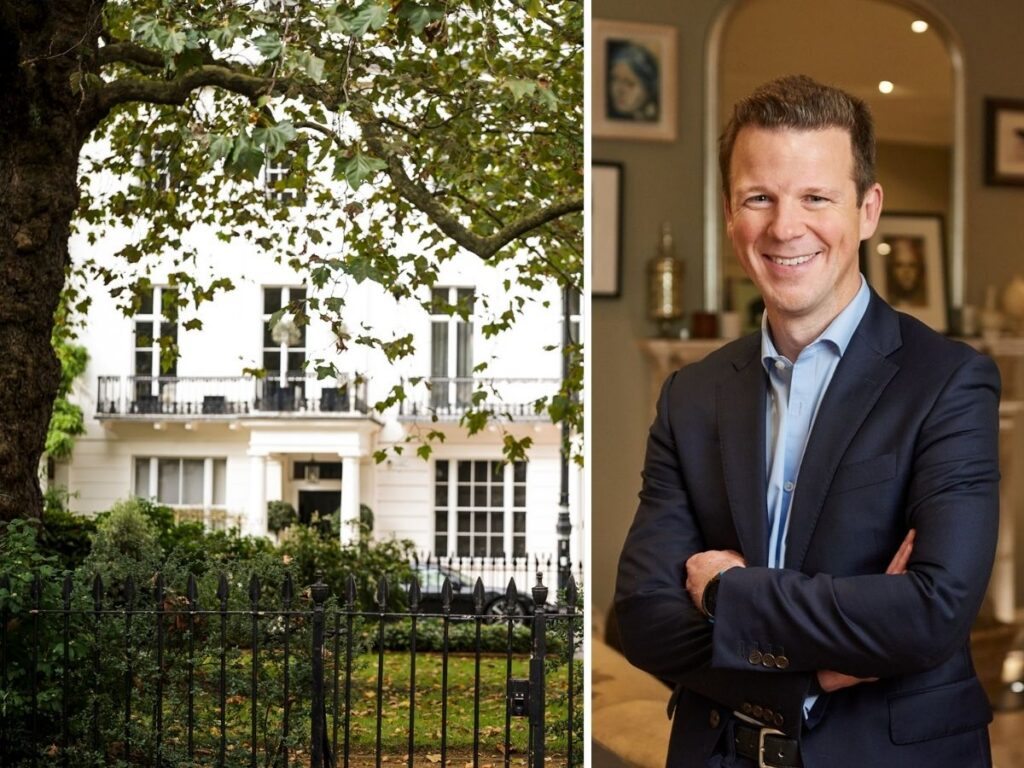
Britons who settled in Dubai attracted by its perceived safety are contacting luxury property agents to arrange emergency £5,000-a-week rentals in London, writes David Byers in The Times. Will Watson, Head of The Buying Solution, shares his insights.
As property agents report at 15% increase in enquiries from the UAE, Britons who relocated to Dubai are anxious to return to the UK, reports David Byers in The Times. Will Watson, Head of The Buying Solution, and currently acting on behalf of three Dubai-based clients, offers his observations.
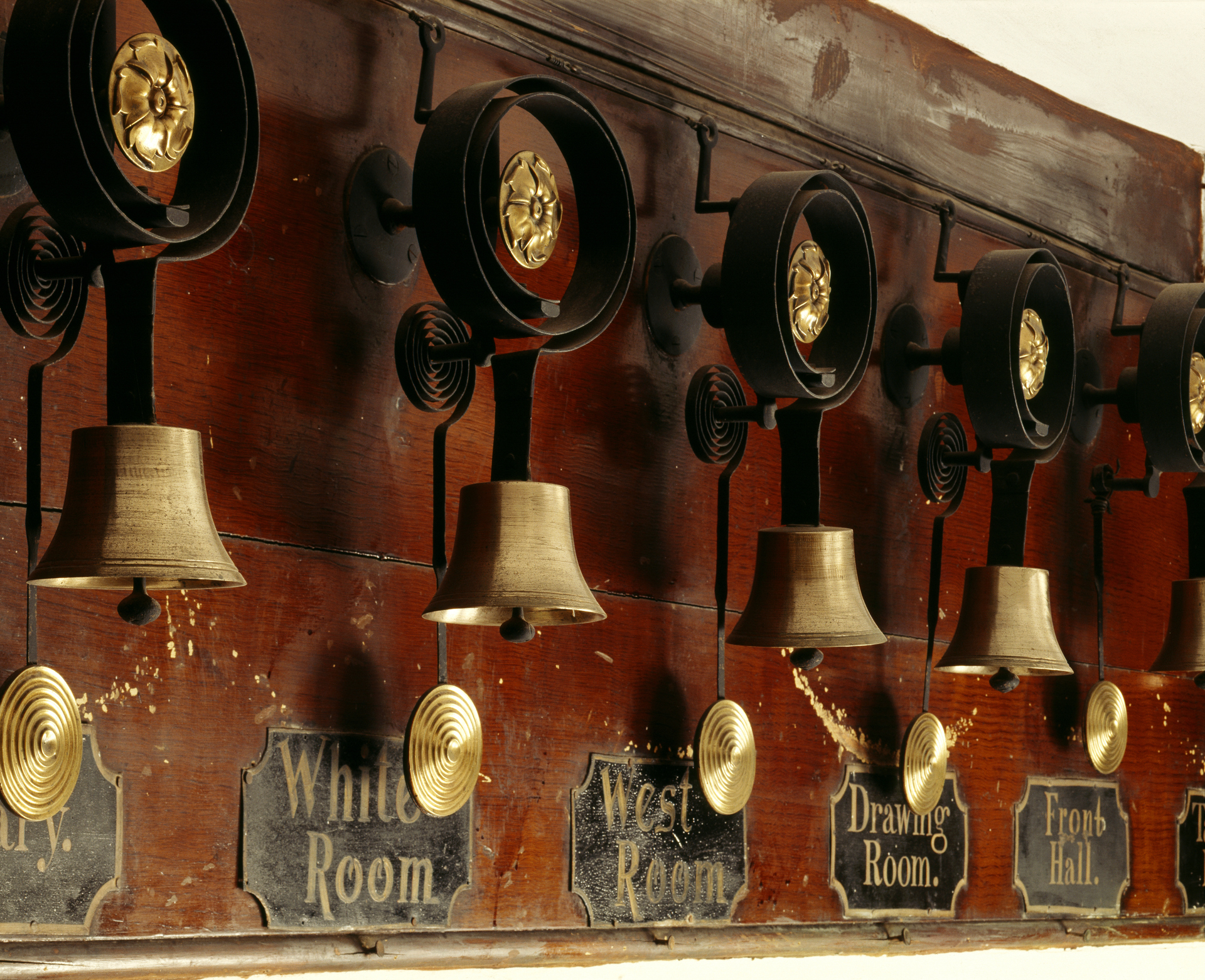
Once an integral part of the orderly running of a stately home, service bells fell out of use with the dawn of modern technology. But as our Partner Mark Lawson shares with Lucy Clayton in the Financial Times, these once anachronistic artefacts are enjoying a revival.
From summoning a breakfast tray to requesting a nightcap, service bells have been used since the mid-18th century to ensure the smooth running of stately homes and large houses. As Lucy Clayton reports in the Financial Times, they are now being installed as part of contemporary house renovations, both for aesthetic and practical reasons. Mark Lawson, our Partner for the Southern Counties & High Value Residential & Rural Estates, shares his insights.
Some 13 per cent of prime sales in the Cotswolds in 2025 were to Americans, report Melissa York and David Byers in The Times. Our Partner and Head of the Cotswold Harry Gladwin shared his insights.
Sarah Frances Kelley for The Buying Solution
The Cotswolds is continuing to see a surge of American buyers – and the region is taking note. Melissa York and David Byers writing in The Times explore how the area is adapting to their tastes, with our Partner Harry Gladwin highlighting why the Cotswolds appeals so strongly: top schools, beautiful homes, and lifestyle destinations like Estelle Manor and Soho Farmhouse.
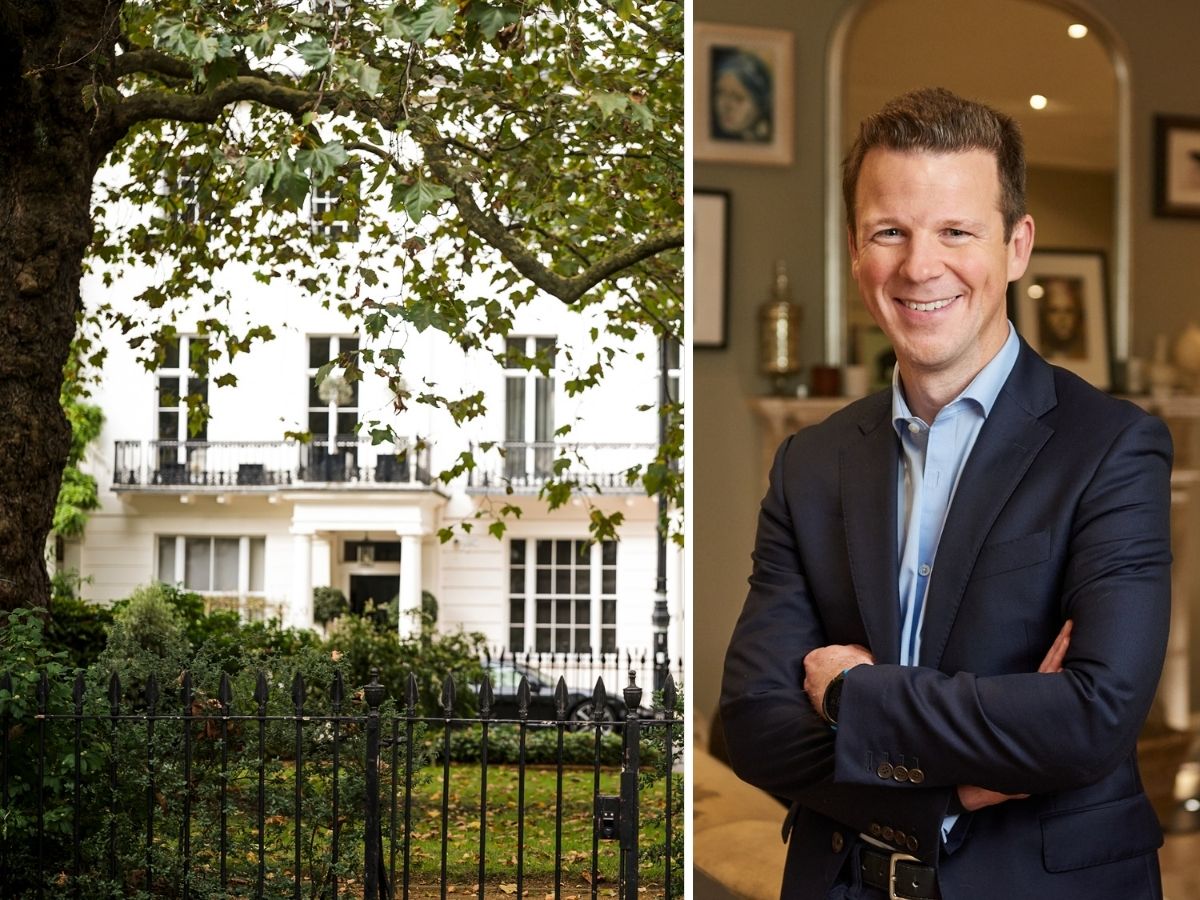
Head of The Buying Solution, Will Watson, has decades of experience navigating London’s property market at its highest levels, having held senior roles on the selling side before moving into buying. Here he shares what he has learnt about trust, success and managing risk
There is no such thing as a ‘perfect’ market
I cannot recall a more unpredictable market than the one we find ourselves navigating today. Domestic politics feels unusually fluid, global events continue to shock, and the six-month outlook is unclear – let alone the five-year view. Even the near-term leadership of the country is uncertain day to day.
In my experience, property decisions, at their best, aren’t driven by forecasts or speculation. They’re made based on your personal circumstances: your life, your priorities, and your timing. That has rarely felt more relevant.
We appear to be bouncing along the bottom of the market, but cycles always turn. Consider the discussion around non-dom taxation. Italy’s flat annual regime has already drawn buyers to Milan, though many would have preferred to remain in London. Were a comparable policy introduced here, it would materially alter sentiment. For now, however, London presents unusually compelling value for domestic buyers with a medium-to long-term view. In some instances, properties are transacting at circa 30% below their listed price from just two years ago.
Writing at the tail-end of Winter, the market is seasonally quieter, and transaction volumes are lighter – but deals are still being done. In fact, we’re notably busy. Our clients recognise that thinner competition before the Spring market gains momentum offers a strategic window. Particularly where sellers who failed to secure a buyer in 2025 have become more pragmatic.
Ultimately, buying property is less about reacting to headlines and more about recognising when your own circumstances align with opportunity.
The best property isn’t about price per square foot
It is easy to get fixated on numbers and what you feel you should be paying per square foot. But comparable data is just a guide and, more often than not, it doesn’t give the full picture of a property. A truly special house is hard to repeat and rare to trade; we may only see its like once every few years at best. Therefore, if you find a property that you really want and you are trying to be too clever on pricing, someone will likely beat you to it – and you might never get that opportunity again.
One of my longest-standing clients, a seasoned international buyer with properties around the world, once told me his strategy. He buys the best available asset when he needs it. That might mean a one-bedroom apartment in Chelsea for a child at £2m, or a detached family house in Holland Park for £30m+. The price point is secondary, the quality is not.
He has never been preoccupied with pounds per square foot or comparable evidence. By focusing instead on rarity and quality, those acquisitions have consistently proven to be exceptional homes, as well as a reliable store of wealth. He is frequently approached about selling one of his properties, as demand remains strong for the best, despite the unpredictability of the current market.
He summed it to me up perfectly: “We’ll buy what we need to buy, and we’ll pay what we need to pay – if it’s rare.”It is advice I’ve carried ever since. Focus on the unique, the hard-to-repeat, and the rest usually takes care of itself. After all, whether it’s property, a car, a watch, or any rare asset, scarcity ensures there is always a buyer.
You can’t eliminate risk, but you can control it
Almost every buyer worries about overpaying. No one wants to complete on a house only to discover six months later that it might have been secured for 10% less. Yet waiting doesn’t guarantee a better deal. After all, a positive political shift or a surge in the market could just as easily result in you paying 10% more – and finding the right property will often take longer than you think.
I always remind my clients that we want to buy from someone that genuinely wants – or needs – to sell. Much of the prime market is made up of discretionary sellers with inflated expectations. As a result, agreeing sensible terms can be protracted or even unworkable, or simply take longer than most of our clients’ search windows allow. This is particularly true at the higher price points in both the London and countryside markets.
There are also practical risks to weigh. You may buy an immaculate turnkey home to avoid the disruption of building work, only for a neighbour to start a major three-year renovation. In Central London, almost every street has at least one ongoing project, so the risk is real. Our role is to conduct thorough due diligence – not only on the property itself, but on the immediate surroundings, neighbouring ownership and any pending planning applications – so that disruption is assessed before contracts are exchanged, not afterwards.
Security is another consideration. Headlines can be alarmist, but London hasn’t emptied out; rather, security has become part of the brief. Beyond aesthetics, we assess infrastructure – plumbing, electrics, access points – and, where appropriate, bring in specialist advisers to evaluate risk properly. The aim is proportionate protection, giving you peace of mind without letting fear drive your choices.
In short, concerns about overpaying, noisy neighbours and security are justified, but none are deal-breakers if you are well informed. That’s what separates a cautious buyer from a confident one.
Integrity is the real measure of success
The first transaction I completed as a buying agent was in Marylebone – an area I didn’t know well at the time.
The client came to me through a professional contact. He was renting locally and wanted to buy a house nearby. I was candid: I had not yet bought in Marylebone, but I knew exactly what made an exceptional house and I promised him my full focus. That honesty mattered. He trusted me, and I secured him a remarkable house just off Marylebone High Street, complete with a rare roof terrace. He is still there today – and over the years, he has become a friend and introduced me to many of his contacts who have become clients over the years.
Honesty, integrity and truthfulness aren’t buzzwords; they have guided me from day one, and are central to everything I do. The emphasis is not on completing transactions for their own sake, but on protecting our clients’ interests – we take that responsibility very seriously and have little tolerance for market noise, poor instructions and chronic overpricing.
I represent my clients as I would family or close friends. Success, for me, is not about money, off-market deals, or outmanoeuvring another buyer, it is measured by finding the house they have been dreaming of at a price they are comfortable with and knowing that we made that possible for them.
While the Cotswolds’ famed ‘golden triangle’ often grabs the headlines, the lesser-known ‘Northwolds’ – the northernmost villages of the Cotswolds – is where buyers can still find genuine value. Writing in The Standard, local resident Nicky Rampley-Clarke explores the area’s growing appeal, with expert insight from our partner Harry Gladwin, Head of the Cotswolds region.
Having relocated to the north Cotswolds from Tooting – via a spell in suburban Surrey – writer Nicky Rampley-Clarke reflects in The Standard on the appeal and relative value of the so-called ‘Northwolds’: a triangle of Oxfordshire countryside framed by Shipston-on-Stour, Deddington and Banbury.
Within easy reach of Burford, Kingham and Stow-on-the-Wold, yet developing a buzzy social scene and identity of its own, the area offers a compelling alternative to the traditional Cotswold hotspots. As our Partner Harry Gladwin notes, values here can sit 10–15 per cent below comparable properties in the more established prime villages – without sacrificing access, charm or community.
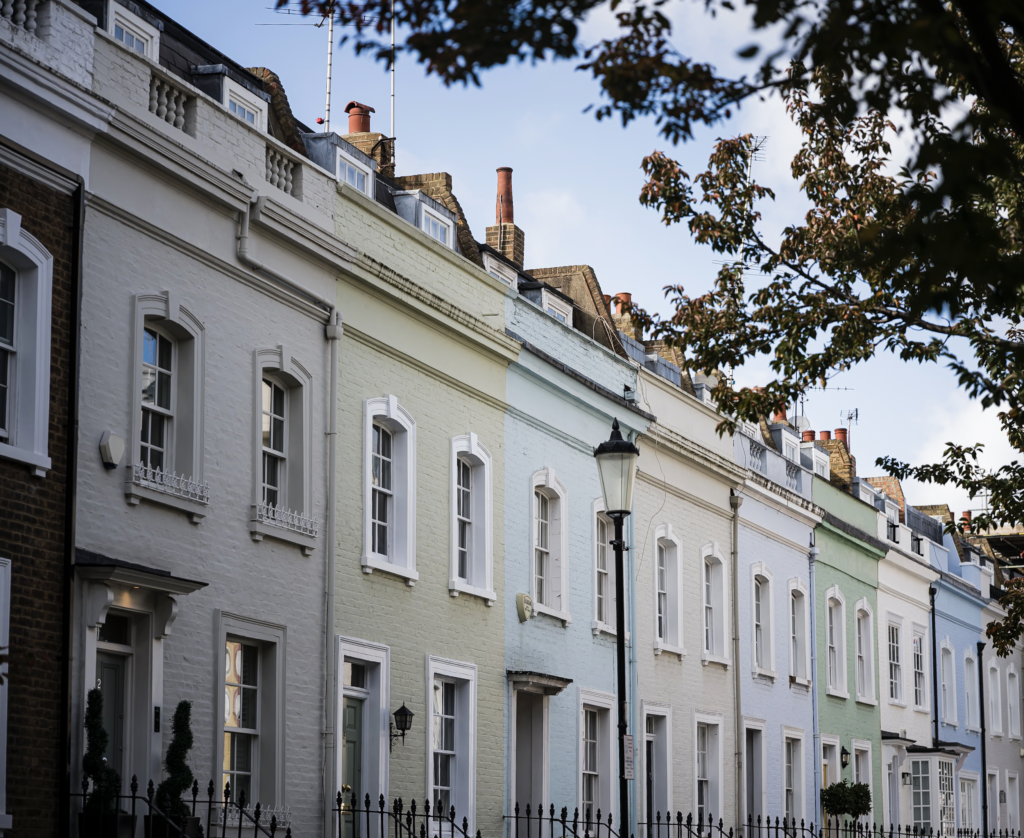
In prime central London, the process of securing the right home has become increasingly complex and fragmented. For high-performing professionals and internationally based clients alike, the challenge is no longer simply finding property; it is navigating the noise with confidence and efficiency.
In the world of prime central London property, time has become the most valuable currency of all. Increasingly, the clients who come to me are not short of means – they are short of hours, headspace and tolerance for the sheer administrative drag that accompanies a London property search.
Roughly 75 per cent of our clients fall into two distinct camps. About 40 per cent are domestic family buyers; the remaining 35 per cent are overseas buyers. On the surface their circumstances differ, but their core problem is identical: they are time-poor, information-overloaded and in need of someone to cut through the noise. That, in essence, is where The Buying Solution comes into its own.
The Domestic Family Buyer: high-flying and time-poor
The Domestic Family Buyer is typically a professional couple – often in law, finance or tech – who have been renting in London for several years while careers accelerated and life became incrementally busier.
They are usually thoughtful, analytical and perfectly capable of conducting a search themselves. Indeed, many begin that way. But somewhere between their 47th Rightmove alert and their third collapsed chain, the process starts to fray. What they lack is not intelligence or motivation; it is bandwidth.
We often meet them at the point of fatigue. One client we worked with recently had been searching independently for more than three years. They had viewed over 100 properties – a number that would test the patience of even the most enthusiastic house-hunter – and had narrowly lost out on a home they loved. By the time we were introduced, they were disheartened and, more importantly, had lost confidence in their own decision-making.
Our first task was not to find a house. It was to reset the process. We spent time together walking the streets they were drawn to, discussing not only what they liked but also what they did not. We always begin this way. The brief on paper is rarely the brief in practice, and early face time is invaluable in building a three-dimensional picture of how a client actually wants to live.
One of the first houses we viewed together would ultimately become their purchase. But we did not rush. We continued to test the market, using that property as our benchmark: how does this compare? What is genuinely best in class?
Within eight weeks of formally instructing The Buying Solution, we had agreed terms on the right house. For clients who had spent three years circling the market, the contrast was stark. What changed was not the market, it was the filtering.
The Overseas Buyer: rarely on the ground
If the Domestic Buyer is time-poor, the Overseas Buyer faces an additional handicap: distance. These clients – often international professionals or families seeking a London pied-à-terre – may only be in the city every month or two. They simply do not have their feet on the ground. The London market, with its patchwork of micro-locations and opaque practices, can feel particularly impenetrable from afar. For them, the risk is twofold: wasted trips and expensive mistakes.
We work with many overseas clients who will only spend part of the year in London, and time is of the essence. In our very first viewing tour, often compressed into a single, tightly planned visit, we will endeavour to narrow their search to the exact postcodes that genuinely suited them.
Should they attempt this alone, they will likely be fielding calls from upwards of 50 agents, attempting to triangulate neighbourhood nuance remotely and booking scattergun viewings during short visits. Instead, we offer clarity. Speed, in this context, is about precision.
Why the modern market overwhelms buyers
Part of the growing demand for buying agents stems from structural change within the London property world itself. Seven or eight years ago, a focused search in an area such as Chelsea or Fulham might have required conversations with five or six estate agencies. Today, the landscape is far more fragmented. Many experienced agents have left large corporates to operate independently in a broker-style model.
The result is a more dispersed, more opaque marketplace. Where once a £4 million search might have involved speaking to eight to ten key players, we are now routinely in contact with north of 40 intermediaries for a single brief. For private buyers attempting to manage this alongside demanding careers, the volume alone can become unmanageable.
Increasingly, clients arrive saying the same thing: ‘we started looking ourselves, but we’ve become overwhelmed.’ Our role as buying agents is to absorb that noise. We review and preview everything that crosses our desks. By the time a client steps into a car with us for a viewing tour, every property has been pre-vetted against their evolving brief. They have one point of contact, one curated schedule and – crucially – confidence that their time is being used efficiently.
Sarah Frances Kelley for The Buying Solution
The power of relationships and off-market access
Relationships remain the engine of the London buying world. Because we are in constant dialogue with agents, brokers and intermediaries, we are often able to access opportunities before they reach the open market.
Approximately 60 per cent of what we buy at The Buying Solution is off-market. For busy clients, this is not simply about exclusivity; it is about efficiency. If you are only viewing the most relevant opportunities – many of which never appear online – the search becomes markedly more focused.
It also allows us to move quickly when the right property surfaces. One of the most valuable outcomes of our early work with clients is the refinement of the brief. Through repeated viewings and conversations, we develop a very clear sense of what “right” looks like. When it appears, we can act decisively.
When the brief evolves
One of the most interesting aspects of this work is how often initial assumptions shift. We can have clients who begin their search adamant they want a flat. Through the process, it becomes clear that what they would truly value is their own front door and a certain sense of privacy. We will ultimately secure a house.
Similarly, buyers frequently begin by insisting they want a turnkey property. Yet when presented with the best property on their favourite street but which requires modest cosmetic work, priorities can recalibrate.
Part of our advisory role is helping clients understand where compromise is sensible and where it is not. How often does this type of house become available? What is genuinely scarce? What can be improved later? These are the judgements that protect both lifestyle and long-term value.
Beyond the property: assembling the right team
Particularly for overseas buyers, the purchase itself is only one component of the process. Many international clients are unfamiliar with the nuances of the London system: leasehold structures, share of freehold arrangements, tax considerations and the choreography of the conveyancing process for starters. Education, delivered quickly and clearly, is essential.
But just as important is team assembly. A smooth purchase requires the right solicitor, sometimes tax advice, occasionally immigration support, and – for relocating families – school consultants. If a property requires work, we introduce trusted builders and designers. The goal is always the same: to create a seamless experience that would be extremely difficult for a time-poor buyer to replicate independently.
Handled correctly, this does not add cost. More often, through careful negotiation and risk management, we save clients multiples of our fee.
Cutting through the noise
At its heart, modern buying agency is as much about clarity as it is about access. For busy professionals, whether London-based or overseas, the property market has become noisier, more fragmented and more time-consuming to navigate alone. The value we provide is focus: one point of contact, whole-of-market coverage and rigorous pre-vetting that ensures every viewing has genuine potential.
In a city where time is increasingly precious, that clarity is often the difference between a draining search and a decisive, confident purchase. And for our clients, that is precisely the point.
Meet The Buying Solution’s London team here. For news, expert commentary and invaluable property insight, subscribe to The Insider, our quarterly newsletter, here.
As wealthy buyers from the US, Asia and the Middle East continue to acquire manor houses and large estates in the Cotswolds, John Gapper reports for the Financial Times on how the region has become a global brand akin to the Hamptons in Long Island, and agents are competing for fees. Harry Gladwin, our Partner and Head of the Cotswolds shared his personal insights.
The Cotswolds’ iconic ‘golden triangle’ – stretching from Chipping Norton to Stow-on-the-Wold and Burford – is fast becoming a magnet for Ultra High Net Worth international buyers seeking historic manor houses and sprawling estates. As John Gapper reports for the Financial Times, the region’s allure now rivals elite destinations such as the Hamptons, attracting wealthy clients from the US, Asia and the Middle East. Harry Gladwin, our Partner and Head of the Cotswolds, shares his expert insights into this booming market, and the rise in agents operating in the area.
As increasing numbers of American buyers seek homes in the Cotswolds, CNN’s Business Reporter Anna Cooban reports on the region’s appeal, with insights fromour Partner and Head of the Cotswolds, Harry Gladwin.
Sarah Frances Kelley for The Buying Solution
In the past 12-18 months, the number of American clients registering with The Buying Solution looking for property in the Cotswolds has grown by around 30%, reflecting the ever-increasing popularity of the area. CNN’s Business Reporter Anna Cooban explores this trend and speaks to Harry Gladwin, our Partner and Head of the Cotswolds, about the region’s appeal.
With American buyers pouring into the Cotswolds, this quintessentially English region is undergoing a striking transformation, Joshua Nelken-Zitser writes for Business Insider. Our Partner, Harry Gladwin, explores what’s driving the influx — and its long-term implications.
Sarah Frances Kelley for The Buying Solution
The wave of high-profile American visitors or residents in the Cotswolds – from Taylor Swift and Ellen DeGeneres to JD Vance – has turned this bucolic stretch of countryside into one of the UK’s buzziest enclaves. Their arrival comes amid a record surge in US visitors and soaring spending across the UK, as wealthy travellers increasingly look to stay, not just holiday. Now, with applications for British citizenship hitting unprecedented highs, our Partner and Head of the Cotswolds, Harry Gladwin, shares his insights with Business Insider on what’s driving the boom.
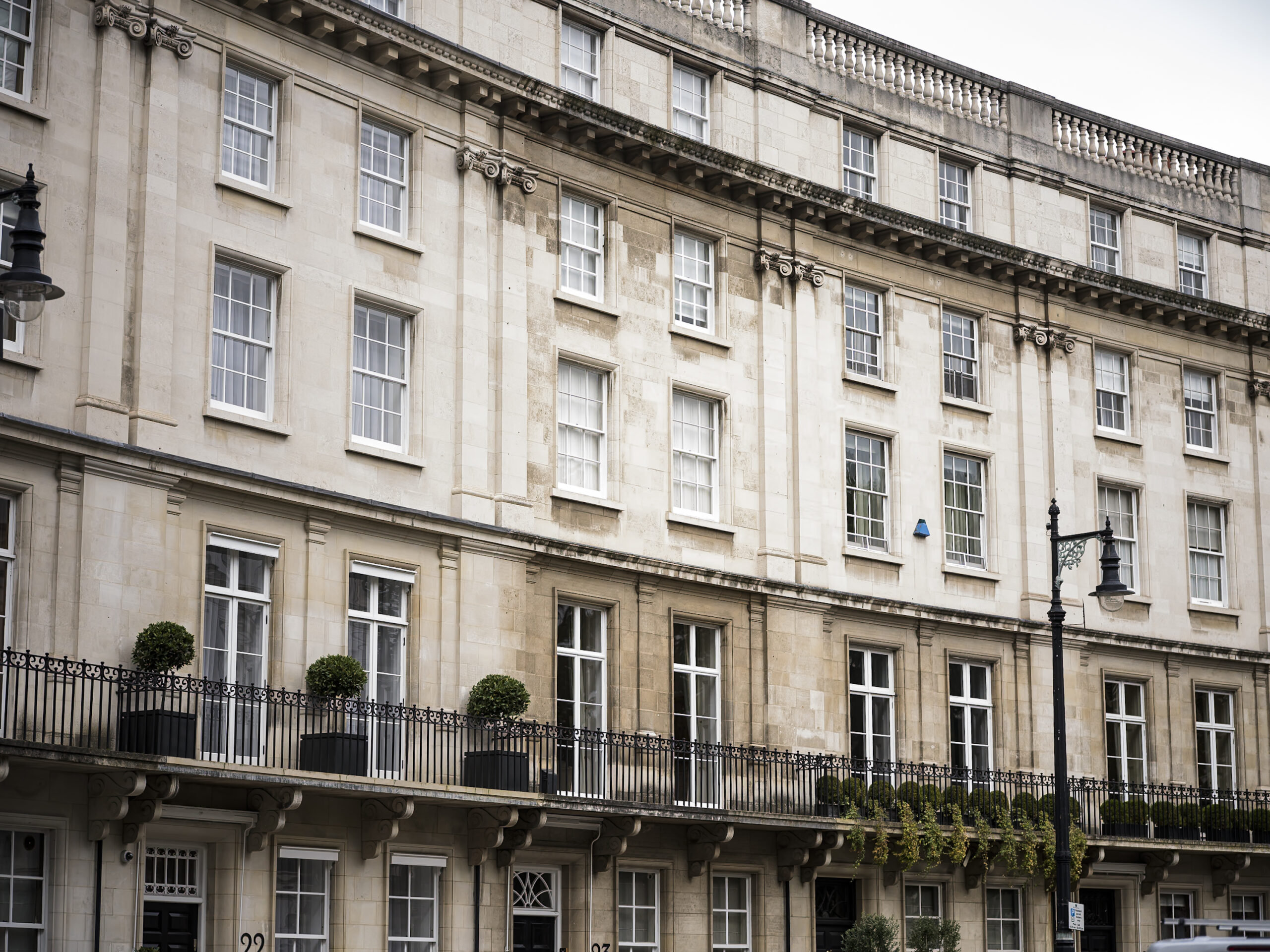
With the Chancellor’s so-called ‘mansion tax’ in her Budget less severe than anticipated, wealthy buyers are returning to the London market, Emma Haslett reports for The Observer, with insights from Will Watson, Head of The Buying Solution.
Sarah Frances Kelley for The Buying Solution
After months of sluggish growth – fuelled in part by uncertainty over what Chancellor Rachel Reeves’ Budget might contain – the property market is beginning to stir again, writes Emma Haslett for The Observer. Will Watson reflects on clients’ reactions in the days since the announcement and sets out his expectations for 2026.
We use cookies to improve user experience and analyze website traffic. By clicking “Accept,” you agree to our website’s cookie use as described in our Cookie Policy.
This website uses cookies to improve your experience while you navigate through the website. Out of these, the cookies that are categorized as necessary are stored on your browser as they are essential for the working of basic functionalities of the website. We also use third-party cookies that help us analyze and understand how you use this website. These cookies will be stored in your browser only with your consent. You also have the option to opt-out of these cookies. But opting out of some of these cookies may affect your browsing experience.
Necessary cookies are absolutely essential for the website to function properly. These cookies ensure basic functionalities and security features of the website, anonymously.
Cookie
Duration
Description
cookielawinfo-checkbox-analytics
11 months
This cookie is set by GDPR Cookie Consent plugin. The cookie is used to store the user consent for the cookies in the category "Analytics".
cookielawinfo-checkbox-functional
11 months
The cookie is set by GDPR cookie consent to record the user consent for the cookies in the category "Functional".
cookielawinfo-checkbox-necessary
11 months
This cookie is set by GDPR Cookie Consent plugin. The cookies is used to store the user consent for the cookies in the category "Necessary".
cookielawinfo-checkbox-others
11 months
This cookie is set by GDPR Cookie Consent plugin. The cookie is used to store the user consent for the cookies in the category "Other.
cookielawinfo-checkbox-performance
11 months
This cookie is set by GDPR Cookie Consent plugin. The cookie is used to store the user consent for the cookies in the category "Performance".
viewed_cookie_policy
11 months
The cookie is set by the GDPR Cookie Consent plugin and is used to store whether or not user has consented to the use of cookies. It does not store any personal data.
Functional cookies help to perform certain functionalities like sharing the content of the website on social media platforms, collect feedbacks, and other third-party features.
Performance cookies are used to understand and analyze the key performance indexes of the website which helps in delivering a better user experience for the visitors.
Analytical cookies are used to understand how visitors interact with the website. These cookies help provide information on metrics the number of visitors, bounce rate, traffic source, etc.
Advertisement cookies are used to provide visitors with relevant ads and marketing campaigns. These cookies track visitors across websites and collect information to provide customized ads.